

Are you lost and confused? Unhappy? Not entirely sure what you’re feeling?
Daily life stressors can make you feel that way. Yet, if these feelings last longer than a few weeks, it could indicate signs of mental health issues.
The issues people commonly face include anxiety, depression, stress, lack of confidence, trauma-related disorders, negative thoughts and so on.
There are several ways to manage these issues on your own. For example, building community support, developing healthy relationships, creating a self-care routine, journaling, or meditation can help manage your emotions.
However, when these habits aren’t enough, therapy can provide a non-judgmental space to help regain control over yourself and your life.
But if you’ve never been to mental health therapy before, the process may seem complicated.
What if you don’t know what to say? What if your therapist doesn’t like you? Or what if you don’t like your therapist? There are too many questions.
Fortunately, you can explore all of them during therapy.
To help you get started, we’ve curated a therapy guide for beginners, from when you should start therapy to the termination process and everything in between.
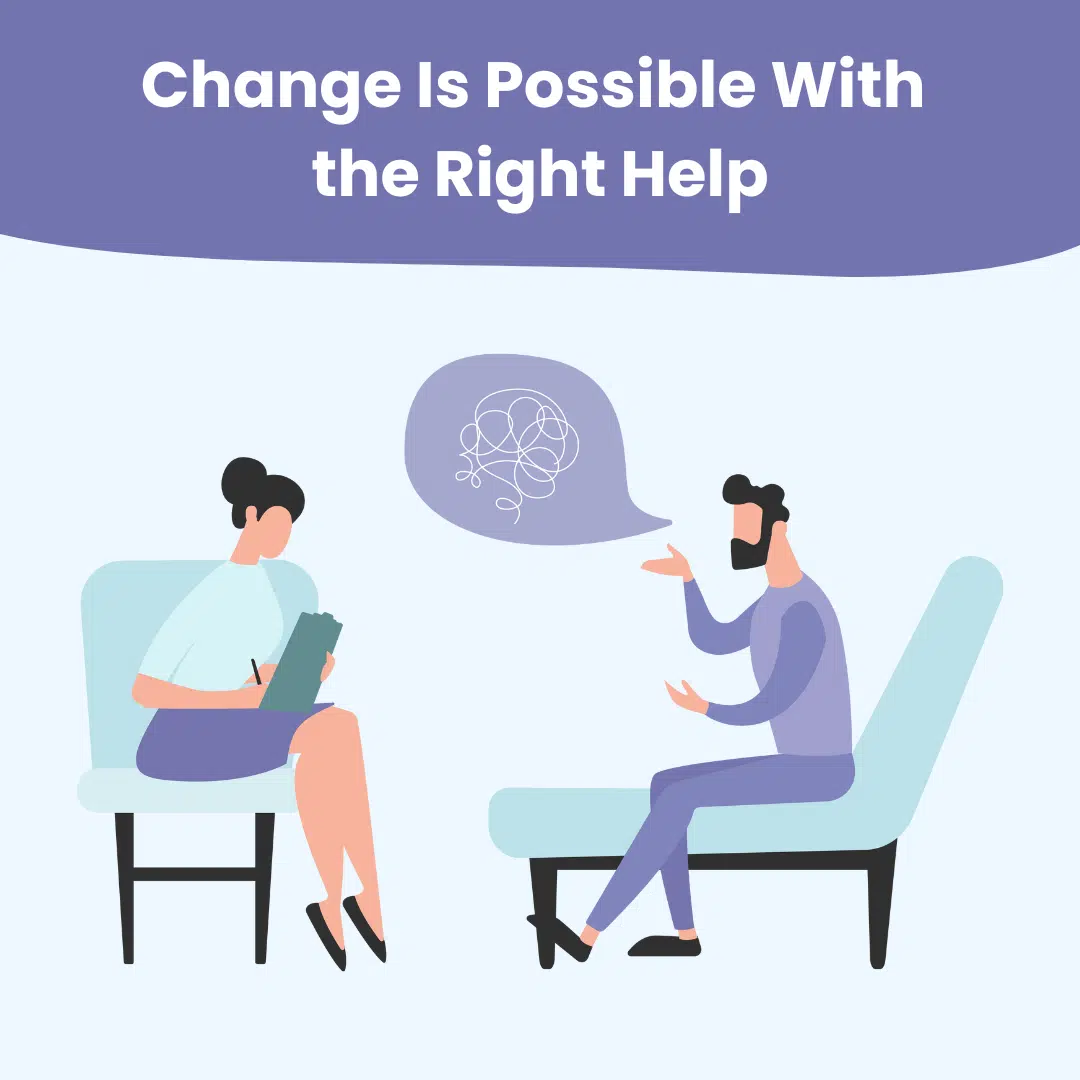
When to start therapy is one of the most asked questions. While there are several reasons to seek help, one word can sum up the purpose of it: change.
You may need therapy if there’s something in your life you’re struggling to change on your own.
If you answered yes to the above questions, give therapy a try.
Think of therapy as a mirror where you can see yourself – with all your complexities – through the eyes of a trained professional. When looked at consistently, this mirror can help you break through your tunnel-vision perspective of who you are.
Some of the common signs you need therapy include:
People might tell you that you need therapy if they don’t understand the way you function or if you live unconventionally. But you may need therapy only if you want something about your life to be different.

The short answer is yes!
The long answer, however, has much to do with our perception of ‘big problems’.
People often minimise their issues because they believe that their problems aren’t big enough. However, instead of focusing on the problem, we might need to shift our focus towards the impact the situation has on us.
The reality is that there’s no such thing as a trauma threshold we must reach to deserve professional help.
In fact, our brain can make us feel bad regardless of the severity of the situation. A small problem can affect you just as much as going through something deeply traumatic.
Early intervention for mental health can give you the tools you need to recognise the signs of distress and cope with them.
Your feelings and struggles are valid, regardless of how big or small you think they are.
Moreover, therapy for minor issues can even prepare you to become self-reliant in the future.
Now that you know that seeking therapy in Malaysia before your problems blow up is a great way to become self-reliant, you may wonder how therapy works.
Therapists may focus on two categories during sessions: presenting problems and personal growth.
Personal growth is an ongoing process of working towards your ideal self/life and focusing on positive self-development.
Presenting problems may include challenges that are affecting the quality of your daily life (ie disorders or mental health issues).
In general, the benefits of therapy may include:
Regardless of the reason, you may find that the benefits of therapy are endless. There is something for everyone to take away.
Read on to learn about the five types of therapy and how they can help you.
We provide individual therapy to help you explore your thoughts and feelings in a confidential environment.
The key to success during therapy is to maintain a healthy relationship with your Therapist.
Unlike other types of therapy, you are the only focus during individual therapy. Hence, you may have space and more time to understand and equip yourself with relevant coping strategies.
Being in therapy can help you:
Do you believe that couples therapy is only for those who have problems? That’s not actually true!
Couples therapy in Malaysia can act as a preventive intervention to keep a relationship on track before things get worse.
Every couple may fight, but how do we prevent the arguments from slowly piling up, only to explode later in life?
Couples therapists can act as a neutral party and help resolve the stack of problems so that they don’t collapse.
Therapy can also help improve your interpersonal dynamics, making it a pleasant experience to share your life with your partner.
As a couple, you may gain several therapy benefits, such as:

Marriage can be a beautiful journey, but it’s not always easy.
Sometimes, it can be so challenging that you may become confused or lost about how to solve problems.
You may lose your identity while trying to deal with marital issues such as family stress, unrealistic expectations, and poor communication.
Most of these problems may occur due to a lack of understanding or emotional bonding. This is where marriage counselling in Malaysia can be helpful.
If you’re seeking mental health therapy as a married couple, you can:
Family members may have unique personalities, which may clash and cause conflict.
Conflicts among family members can take a toll on everyone involved. However, family therapy can help with:
Unlike individual therapy, where the focus is only on one person, family therapists may focus on the set of relationships that make up the entire family.
Moreover, family therapy can help:
Children may face the world with whatever information they are aware of (which, in general, could be limited due to their age and adaptability).
Many kids may struggle with low self-esteem, lack of confidence, bullying, harassment, academic pressure, issues with parents, and so on.
Child therapy in Malaysia can help address these challenges with age-appropriate therapeutic techniques.
Some benefits of child therapy may include:
It’s easy to get the impression that all therapists are the same. However, just as you may prefer the approach of certain medical doctors over others, the same applies to therapy.
Here’s how to find a therapist in five simple steps:
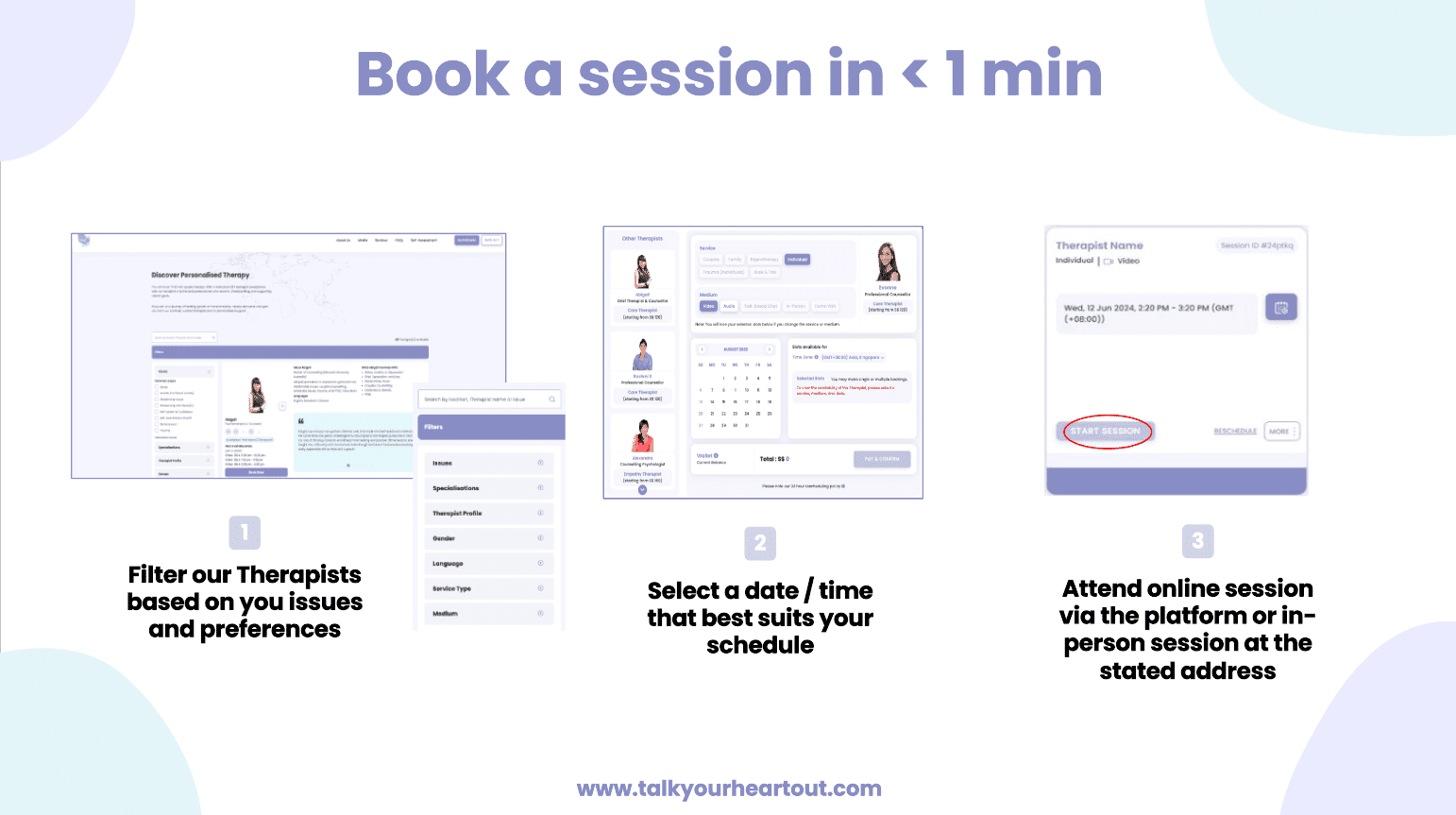
If you’re looking to start therapy with TYHO, follow these steps:
STEP 1: Create an account with us to begin the TYHO Therapist selection process.
STEP 2: Decide on a service (eg individual, couples, marriage, family, or child therapy) and use the filter to search by location, Therapist name, or issues.
STEP 3: Review the relevant profiles that show up, watch the Therapist’s introductory videos, and read their descriptions and client reviews to shortlist your options.
STEP 4: Click the ‘Book Now’ button to select the service, medium, and slot.
STEP 5: Click on ‘Pay & Confirm’ to book your first session. You will find all your scheduled sessions and other details on your dashboard!
Choosing the right therapy method may be confusing if you don’t know what information to look for.
Your therapy experience can increase significantly based on the right approach. Here’s an overview of the most common types of therapy:
Even knowing as much as you’ve just read can help you make an informed decision about choosing the right therapy!
When thinking about online vs offline therapy, you may have to consider your:
Some of the pros of in-person therapy in Singapore may include:
Some of the pros of online therapy in Singapore may include:
One type of modality is not better than the other.
Try to compare the pros of online vs offline therapy and decide which advantages matter the most to you.
You’ve finally booked your first therapy session – congratulations! Now, you might be wondering about preparing for therapy.
Below are 3 first therapy session tips to help you get started:
Journaling your thoughts and understanding exactly what you might need to talk about with your therapist can be helpful.
You can make a bullet list that includes:
Think of your first therapy session as a mutual interview. This is the time you can utilise to get to know your Therapist and make adjustments accordingly.
For example:
Asking questions can help you finalise the Therapist and set the tone for future sessions.
Therapy sessions require serious emotional work and can have you feeling tired or numb, especially after the first therapy session.
If possible, try to clear your calendar after you finish your session. Give yourself a relaxing break – visit the cafe, read a book, or take a nap if that helps.
Remember to reflect on your session leisurely and after you collect your thoughts.
The first therapy session is usually known as the intake session. Your Therapist may use the 1-hour time to set expectations and build trust with you.
Setting expectations could mean discussing about the Therapist’s:
After the initial discussion, you may be expected to talk about your mental health history, medical and family history, past and current relationships, background and work type etc.
Typically, you may notice changes in a few weeks based on your presenting problems.
However, it can take a few months or more if you’ve been struggling with mental health issues for a long time.
Therapy duration and outcomes are as unique as you are. There is no timeline that works for everyone universally.
The only universal concept that works for everyone is consistency and openness. The more consistent you are, the sooner you may notice the benefits.
Similarly, therapy frequency depends on several factors, such as:
Some people may want sessions every week, while others can only afford to book sessions bi-weekly.
Try to have an open conversation with your Therapist to determine what works best for you!
You worked hard to find a therapist. But what do you do if you don’t like your therapist?
Please know that you don’t have to suffer in silence. It’s okay to switch therapists if the fit isn’t right.
The first thing to do is figure out why you don’t like your therapist.
Do you feel judged? Do your conversations or exchanges not make sense? Or do you simply feel that something is off?
Once you understand the reason, the second thing to do is to talk to the therapist. If your therapist is understanding, they will work with you to figure out what’s wrong or help you find someone who suits your needs.
Talking about your preferences could be a turning point – either to fix the therapeutic alliance or to find someone better.
Yes! Sharing past therapy experiences with your new therapist can help them learn about your preferences.
You can share what didn’t work during sessions. If you parted with your old therapist on good terms, they may share their therapy notes with your consent.
The disclosure of therapy history is usually helpful in making the transition smoother and improving new therapist communication.
There might be times when therapy in Singapore may be out of reach.
Although mental health therapy is an essential part of caring for your psychological well-being, you can still use the tips below to regulate your emotions and manage your well-being.
Below are therapy strategies that you may use during therapy or can self-learn through free online resources.
The 4 tips are:
Mental health exercises like tracking your daily mood swings, behavioural patterns, and general progress can give you a bigger picture of how to manage your issues.
To make the most out of this therapy strategy, try to create three columns: date, mood, and notes.
In the mood column, you can either use emojis or words like ‘sad’ and ‘happy’ to record your state of mind.
In the note column, try to journal your thoughts. Write about why you are sad/happy, what you did that day, and if you engaged in any mindfulness and meditation exercises.
Tracking daily mental health progress can also remind you to check in on yourself and help you identify patterns that are serving you.
Professionals commonly use cognitive behavioural therapy (CBT) to treat issues such as depression, anxiety, stress, and addiction.
CBT tools in Singapore are also intended to be used outside therapy sessions. Using such therapy strategies outside sessions is one of the biggest benefits of therapy.
You can sign up for guided courses or mental health apps to get started with these CBT tools in Singapore.
Using self-care CBT tools is also known as self-directed therapy. Remember that these tips are not a replacement for traditional therapy. Still, it can supplement your mental health journey when you can't afford therapy.
Some activities you can do to use self-care CBT tools include:
Although focusing on social relationships sounds simple, it can greatly improve your emotional and mental wellness.
Studies indicate that connecting to other people can provide a sense of meaning in life and decrease loneliness.
To connect with other people, you can:
When we talk about social connections, it could also involve pets and animals.
Recent research shows that animals can increase self-compassion, reduce anxiety, and make it easier to meet new people.
If you don’t have a pet, you can try to volunteer at a local animal shelter or work part-time to foster dogs and cats.
The most important thing to focus on is to find a community that makes you feel comfortable and loved.
Trained professionals conduct mindfulness exercises in Singapore, or you can learn them yourself through free online resources.
Mindfulness and meditation exercises are an extremely popular stress-relieving self-care tool and help you become more attuned to yourself, your thoughts and emotions.
Research shows that learning breathwork, which is a type of mindfulness exercise, can help manage anxiety and reduce symptoms of chronic stress and depression.
Breathwork is learning how to regulate the flow of your breathing patterns to change your emotional and psychological state.
To get started, you can try the 4-7-8 breath to manage stress.
4-7-8 breath, or relaxing breath, is one of the therapy strategies that involves inhaling for four counts, holding the breath for seven counts, and exhaling for eight counts.
Try the relaxing breath before your bedtime or during stressful moments to alleviate tension. You can use free counter apps if you find it hard to keep count.
Remember to inhale through your nose and exhale through your mouth. Repeat this cycle for four cycles or for however long you need to calm down.
The core of mindfulness and meditation exercises is learning breathwork. Once you understand how breathwork works, you can maintain different types of counts for inhaling, holding breath, and exhaling.
“There is no good or bad meditation — there is simply awareness or non-awareness. To begin with, we get distracted a lot. Over time, we get distracted less. Be gentle with your approach, be patient with the mind, and be kind to yourself along the way.” - Andy Puddicombe.
Sometimes, when you’re feeling distressed or unhappy, checking in with yourself is an easy way to connect with your emotions and thoughts.
By using self-check-in prompts, you can become more aware of yourself, how you function, the patterns helping you, and how to manage your feelings better.
While it is hard to engage in personal reflection prompts when you’re sad or frustrated, learning to break free from negative patterns and turning your focus inward can be hugely beneficial.
When you regularly do mental health check-ins, you can:
Some prompts to help you check in with yourself include:
Did you eat a balanced meal today?
Are you giving your body enough water throughout the day?
Have you had any fruits or vegetables today?
Are you hydrating yourself?
Have you had a snack or meal that makes you feel energised?
Did you start your day with a nourishing breakfast?
Have you taken time to enjoy your food today?
How rested do you feel this morning?
Did you wake up feeling refreshed or groggy?
Were you able to wind down before bed?
Did you have any vivid dreams or nightmares?
How many times did you wake up during the night?
Did you go to bed at a consistent time?
Have you created a calm environment for sleep?
Did you get enough sleep?
How are you feeling right now?
Are there any thoughts on your mind?
Is your body giving you any signals, like discomfort or numbness?
You might feel stress, worry, sadness, confusion, anger, or even tired or hungry. What are you noticing?
Does your body feel tense, relaxed, or somewhere in between?
Are you feeling any emotions or sensations that you want to take a moment to acknowledge?
What tasks or responsibilities do you have right now?
Is there anything you can take off your list or put on hold?
Are there any commitments or expectations that feel too heavy to manage?
Can you let go of things that aren’t as important or can wait?
Are you holding onto any unrealistic expectations for yourself that you could adjust?
What could you do to make your load feel lighter today?
By letting something go, what could you invite into your life that feels helpful?
What do you and your body need at this moment?
What has helped you feel better or supported in the past?
Is there someone you trust, like a friend, family member, or therapist, that you’d like to talk to?
Would reaching out to a community or support group help right now?
How can you give yourself the support you need today?
Life can feel overwhelming due to emotional and physical challenges like stress, work demands, relationships, or health issues.
You may want to share your feelings with a close friend to cope during these times.
However, your loved ones may not be available during crisis situations. That’s why we’ve provided a range of mental health resources in Singapore to help you deal with crisis situations.
During a mental health crisis or when someone is in danger, it’s important to seek emergency mental health help immediately.
Below are resources to help you or someone you care about during critical moments:
If you or someone you know is in immediate harm, call emergency medical services at 995 or approach the A&E department of your nearest hospital.
Samaritans of Singapore (SOS): Call 1767 or WhatsApp 9151 1767 for support
National Anti-Violence & Sexual Harassment (NAVH): 1800 777 0000
Institute of Mental Health (IMH): 6389 2222
Singapore Association for Mental Health: 1800 283 7019
TOUCH Community Service (youth counselling services): 1800 377 2252
Therapy is an active intervention in overall wellness because we all grow into beautifully complex adults with many problems and joys in our lives. Starting therapy can help you manage any current problems like anxiety or relationship issues and equip you with tools to handle conflicts in the future.
Whether you choose online or in-person therapy, make sure that your needs, goals, and preferences align with your therapist's. Finding the right therapist is key to receiving positive therapy outcomes.
Before your first sessions, outline your goals, list questions to ask your therapist, and prepare for post-therapy reflection for a smooth experience.
Along with your therapy journey, remember to also engage in self-care habits like mindfulness, journalling, and maintaining social connections to maintain and improve your overall lifestyle!

If you are in crisis, or another person may be in danger, do not use this site. Please refer to these resources instead.


Mon - Fri (excluding public holidays)
9.30 AM - 6 PM (+08:00 GMT)
© 2026 Talk Your Heart Out Pte Ltd
Need Help? Chat with us