Dear women,
Did you know that women are more likely than men to face mental health challenges such as anxiety, depression, and burnout, yet are often less likely to seek therapy in Singapore until it becomes too much?
Why? Because, from a young age, many of us are taught to endure, adjust, be nice and prioritise the needs of others.
You, too, may be carrying many such heavy bags, passed through generations like unwanted societal heirlooms.
But we’re here to remind you that there are many benefits of therapy for women.
Our blog explores seven common types of emotional baggage that women carry and how therapy for emotional healing can help. Read along, dear women, and give yourself the permission to speak, feel, and heal.
Introduction to TYHO
TYHO provides in-person and online therapy in Singapore. Our platform connects clients to vetted and experienced Psychotherapists, Psychologists, and Counsellors in Singapore. We refer to all our mental health professionals collectively as "Therapists", given the overlap in their scopes of practice. A majority of our Therapists are members of recognised bodies such as the Singapore Association for Counselling (SAC) and the Singapore Psychological Society (SPS). If you'd like help with selecting someone suitable, WhatsApp us at +65 9831 0005 or email us at [email protected].

7 Types of Emotional Baggage Women Often Carry (& How Therapy Helps Put Them Down)
Being a woman in a patriarchal world is a challenging whirlwind of unfair expectations, silenced voices, denied opportunities and invisible labour. Right from childhood, society conditions women (directly or indirectly) to accept this unfairness silently.
However, the world is changing, albeit slowly. Today, women are waking up, taking up space, breaking out of shackles and putting down burdens that were never theirs to carry.
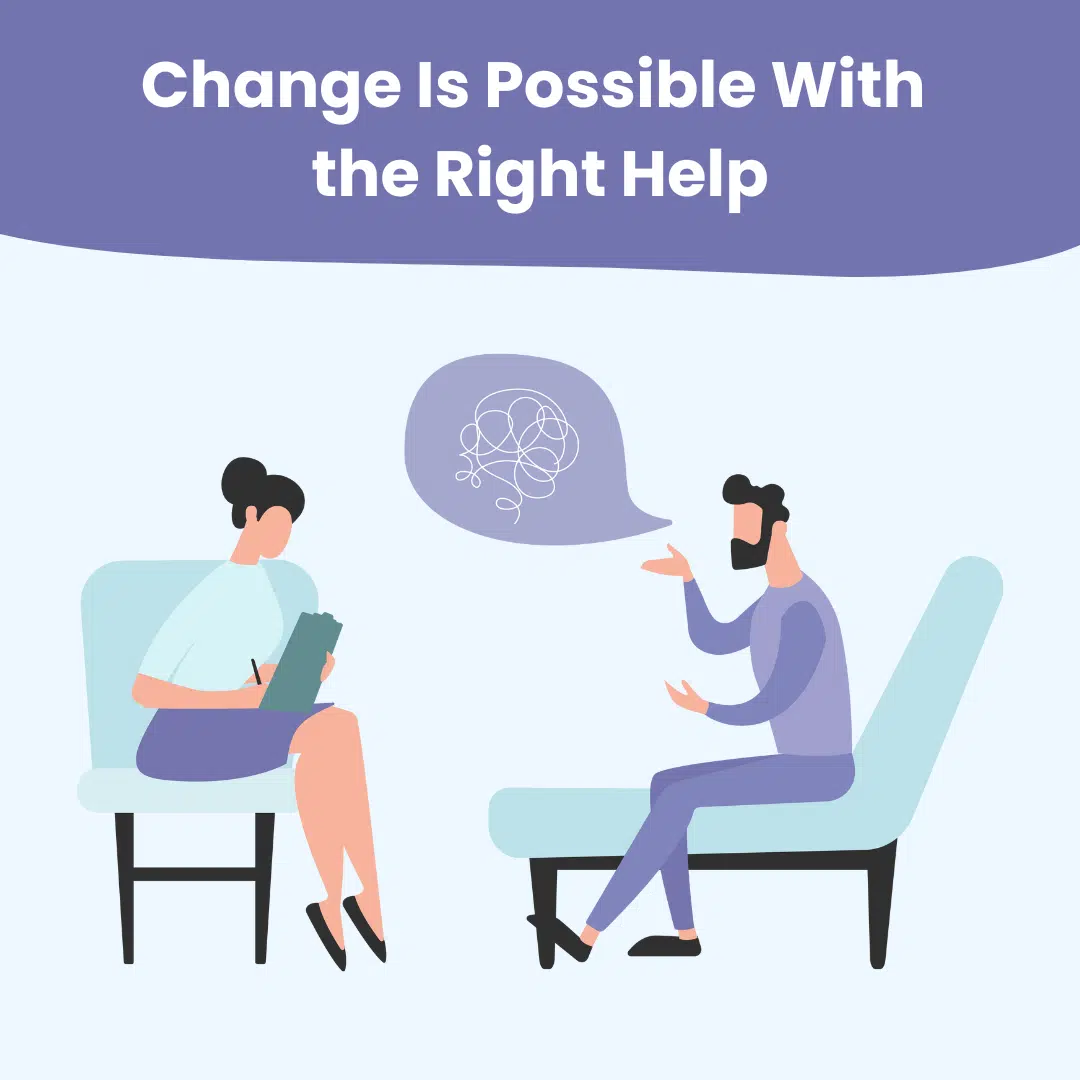
Therapy is a powerful tool that can help women understand these issues and unlearn years of conditioning. This section explores seven common types of such emotional baggage and how therapy services such as individual and couples counselling helps women unpack them.
1) The Bag of Being ‘Nice’ & Putting Yourself Last
Women are subtly conditioned to be agreeable, smiling and gentle – often at the cost of their own emotional well-being.
Growing up in a world that tells you to always be ‘nice’ can leave you pushing down your own needs. You may:
- Hold space for and anticipate other people’s needs
- Take it upon yourself to cool down arguments and absorb unspoken tension
- Internalise and mirror what you saw your mothers and grandmothers do growing up
- Quietly tend to the needs of others – be it family, friends, or colleagues – while ignoring your own
Thus, women often end up carrying all this invisible emotional labour. Consequently, speaking up, disagreeing, or asking for space may feel risky, rude, and overwhelming.
The question then arises, who provides emotional support for women when they need it? Talk therapy and counselling services can. Tools drawn from emotion-focused therapy can also help you express your needs more clearly and ask for support from the people you care about.
How Therapy Helps
Therapy gives you the nurturing space to reconnect with your needs and voice.
Additionally, you learn that your needs matter too, even when it may feel uncomfortable to voice them at first.
Therapists help you understand that being kind doesn’t have to come at the cost of losing yourself. That setting boundaries and voicing needs doesn’t make you unkind or selfish – it makes you self-respecting and strong.
2) The Bag of Guilt & Emotional Suppression
Feeling guilty for resting. For saying no. For taking up space. For feeling an emotion. Many women carry so much guilt or emotional overwhelm within themselves without ever realising it.
This guilt may, in turn, cause you to push down emotions and needs and keep pushing forward like nothing happened – until it spills over.
How Therapy Helps
Mental health therapy for women can help you learn to name what you feel, acknowledge and validate your feelings. You’ll also learn to process them in a healthy manner and let go of guilt that was never yours to carry.
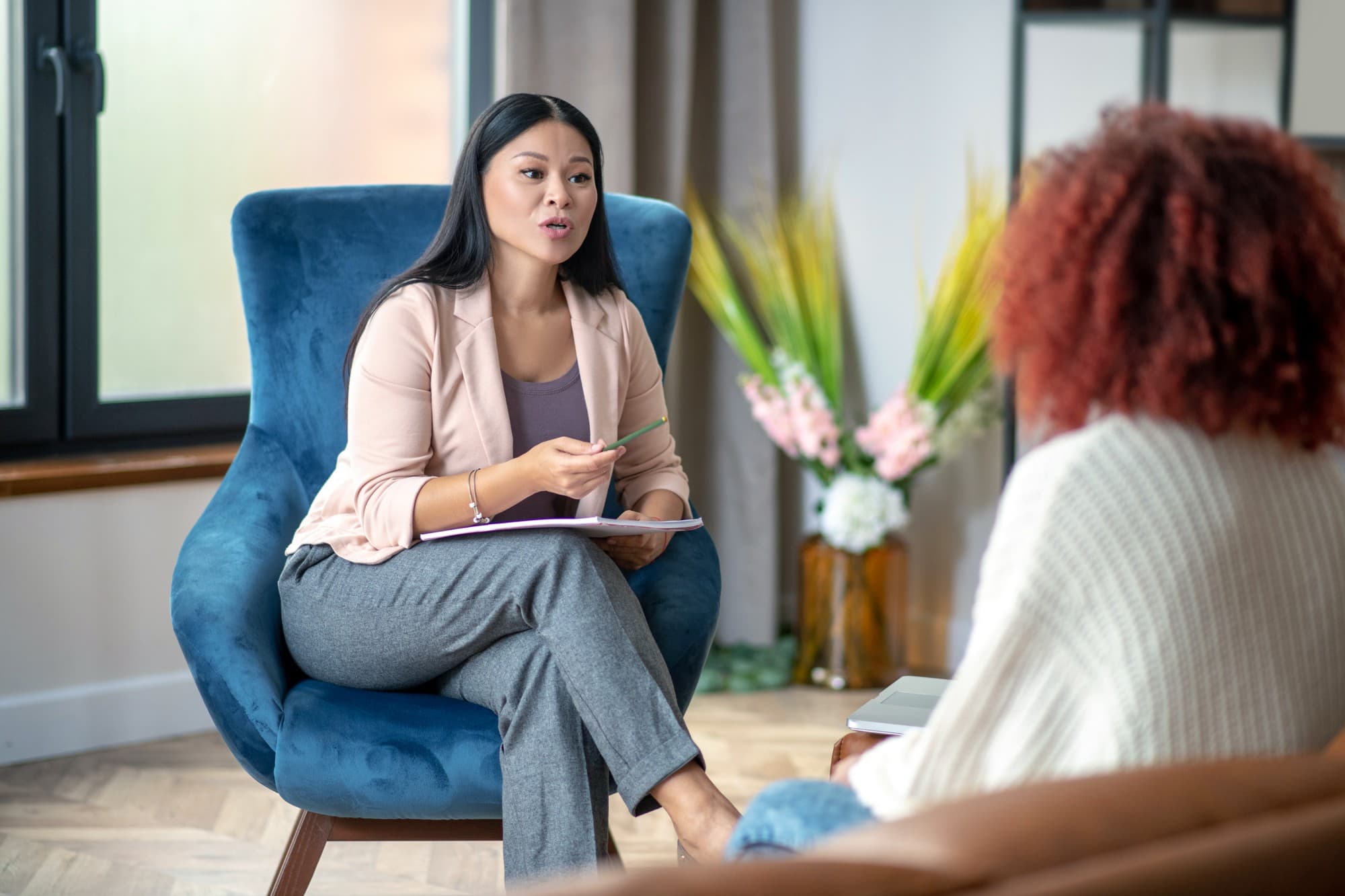
Therapy provides safe and non-judgmental emotional support for women through the guidance of a trained therapist.

96% Find our platform convenient to use
Book a Session today3) The Bag of Comparison & Perfectionism
Women are conditioned to measure themselves constantly – against timelines, societal standards and success markers. You’re either seen as doing too much or not enough. Judged for being too invested in your career or for not having a job and being a stay-at-home mom.
You may thus end up comparing yourself to other women around you based on factors like the following:
- Marriage: ‘Most of my friends are married, but I’m not. Am I a failure?’ or ‘I don’t want to get married, but my family believes that’s the only point to my life.’
- Career: ‘I wish I could start my own business like Sara’ or ‘I’m unable to spend as much time with my kids as stay-at-home moms do because of my career. Am I a bad mom?’
- Children: ‘I don’t want to have kids, but everyone makes me feel like I’m supposed to want to. I’m afraid I’ll be judged and ostracised because of my choice.’
These are just a few examples from the thousands of expectations that are placed on women.
As a result of internalising such expectations, you may compare yourself to those who seem to tick society’s boxes. Comparison, in turn, leads to perfectionism and pushing yourself too much.
How Therapy Helps
Mental health therapy for women offers a safe and neutral space to challenge these internalised expectations. Slowly, you learn to accept yourself as you are, love yourself and treat yourself with compassion.
Through counselling sessions in Singapore, you’ll grow to understand that you’re valuable and perfect just the way you are. Therapists in Singapore can equip you with the tools and support needed to live life on your own terms and at your own pace.
4) The Bag of Generational Trauma
More often than not, women carry baggage that didn’t start with them. The effects of violence, trauma, oppression, and societal beliefs can echo through generations, from mother to daughter.
In addition to this, intergenerational trauma often festers on the inside silently, shaping many areas of your life, including self-esteem, behavioural patterns, physical and mental health (ie causing anxiety and stress). A Singapore psychologist may be able to help you with family trauma.
How Therapy Helps
Therapy helps you unravel the layers of generational trauma, understand their origin, explore how they manifest, and ultimately unlearn and heal.
By engaging in therapy for emotional healing, you can put a stop to this unseen chain of trauma.
5) The Bag of Playing By Gender Roles
You may feel caged in by the boxes you’re expected to fit into and the roles that you’re expected to fill. Daughter, partner, wife, mother, caregiver.
The rules society lays out for women are often unspoken and contradictory. Lead, but not too assertively. Be attractive, but don’t seek attention. The list is very long.
Below are some examples of gender roles that patriarchal cultures expect women to fill:
- The ‘nurturing mother’ who sacrifices everything for her family
- The ‘dutiful daughter’ who obeys, compromises and never questions
- The ‘loving wife’ who supports her husband without expecting support back
- The ‘emotional caretaker’ & ‘selfless giver’ of the family who puts others first, always
- The ‘modest woman’ who’s attractive but not too much
- The ‘career woman’ who manages her career, household and children single-handedly
- The ‘nice woman’ who never raises her voice, doesn’t laugh loudly and always has a smile on her face
How Therapy Helps
Therapists can help you explore your authentic self, away from the constricting nature of these labels. You learn to connect with your true values, interests, beliefs and goals with self-compassion.
Slowly, you may start honouring the roles that feel right to you and stepping away from the ones that don’t align with you.
Therapy can provide emotional support for women, helping you understand that you don’t have to fulfil anyone’s roles or expectations but your own!
In additional to individual therapy, women in Singapore can also seek couples therapy and marriage therapy to unpack issues like gender roles and double standards within relationships.
6) The Bag of Double Standards & Discrimination
Double standards against women are everywhere. Right from the way your mother is expected to cook dinner to the cost of women’s consumer products being higher than men’s (the pink tax).
If you’re a woman, odds are you’ve likely been called too loud, emotional or weak at least a handful of times in your life. You may also have experienced the following:
- Unwarranted comments about body hair and clothing while men’s body hair and clothing aren’t measured by a moral compass
- Being overlooked in professional settings, while male colleagues receive attention for the same action
- Having to work twice as hard for a promotion that pays you half what your male colleague earns
Such instances of double standards, gender bias and subtle (or blatant) discrimination fill the everyday lives of women in Singapore and beyond.
How Therapy Helps
Therapy offers a judgment-free space to unpack, affirm and heal from such experiences.
Your therapist can help validate your lived experiences and approach them with empathy and understanding. That ‘yes, this is unfair’ and ‘no, it’s not just the norm’.
Through therapy for emotional healing, you learn to set boundaries and process anger and frustration in healthy ways.
7) The Bag of Male Validation
From a young age, women internalise, through mass media, social media, societal and family dynamics, that their value is tied to male validation. That the love, appreciation, admiration and desire of men are the ultimate proof of their worth.
When such validation becomes an integral part of your self-worth, it can quietly shape your choices throughout life.
When you start to see how therapy works, it also reminds you that your worth isn’t dependent on anyone else. It never was and never will be.
How Therapy Helps
Singapore counsellors can help you understand the source of this belief and explore ways to challenge it gently.
You learn to tune into yourself, define the terms of your life and find validation from within and not outside.
Over time, therapy can help you stop shrinking to feel wanted and start expanding into your true, authentic self.
Conclusion
Dear women,
Remember that most of the weight you carry is not something you picked up intentionally – it’s been passed down or pushed on you. When you’re not taught to ask for help, breaking that cycle to seek therapy can be very challenging.
But remember, you don’t have to navigate this journey alone. Therapy offers a confidential, supportive and empathetic space to understand, unlearn and rebuild, finding your way back to yourself.
If you’re ready to challenge long-held beliefs, ask much-needed questions and shed the baggage, explore therapy at Talk Your Heart Out.
Take this as your sign to start your healing journey – book your therapy session in Singapore today!

About the Reviewer
Glennamarie MeenachiClinical Psychologist
Glennamarie is a clinical psychologist practising since July 2020, registered with the Malaysian Allied Health Professions Council (MAHPC (CP) 00265) and a Full International Member of the Singapore Psychological Society (FM023020M). She works with mood instability, work-related stress, anxiety, depression, self-esteem, trauma, bipolar disorder, OCD, ADHD and PTSD, conducts psychological assessments for neurodevelopmental conditions (ADHD, ASD, SLD), and previously served as a Crisis Support Officer in vulnerable communities. She reviews TYHO articles for clinical accuracy.
Read more about our editorial process.
View full profile- Master of Clinical Psychology (MClinPsych), University of Cyberjaya (Malaysia)
- Bachelor of Science in Psychology (BSc Psychology), Centro Escolar University (Philippines)
- Standard Mental Health First Aider
- Certified Crisis Support Officer (WAO)
- Malaysian Allied Health Professions Council, Registered Allied Health Practitioner (MAHPC (CP) 00265)
- Singapore Psychological Society, International Full Member (SPS: FM023020M)
- Malaysian Society of Clinical Psychology, Full Member (MSCP: CP1-0350)
- American Psychological Association, International Affiliate (APA: C2405020803)