

“We knew each other for months, but one day they suddenly left, and I never heard back again”
What is ghosting, you ask? It’s like Schrödinger’s influencer: simultaneously remembered and forgotten; the person who ghosted you is alive in your mind, but only as a vague and unanswered question. Where did they go? Why did they leave?
In simple terms, ghosting means someone is trying to cut off contact with you without openly communicating their reasons or saying goodbye. Being ghosted can leave you confused and often feels deeply painful.
Sometimes, people also engage in a push-pull dynamic, where they ghost and come back repeatedly; this could indicate a relationship red flag.
According to TYHO counsellor Aparna, “It’s important to seek perspectives because our judgement can be clouded when we care about someone. So, talk to trusted friends, a counsellor or therapist or a family member because outside perspectives can help you see clearly.” (Watch more here)
What Is Ghosting
Ghosting means refusing to respond to your texts or calls to break the relationship. In modern dating and friendships, ghosting is rapidly becoming the de facto way to exit a relationship.
Note: While ghosting due to discomfort with open communication and honesty can be extremely painful, let’s consider the nuance in separating the act of ghosting to protect oneself from abuse, danger, or harassment. If you’re experiencing harm or a crisis, please visit our crisis resources page or book a same-day session with one of our expert counsellors in Singapore.

Signs of Ghosting
If you’re asking yourself, “What is ghosting?” here are some signs of ghosting that can help you understand the concept better.
An individual:
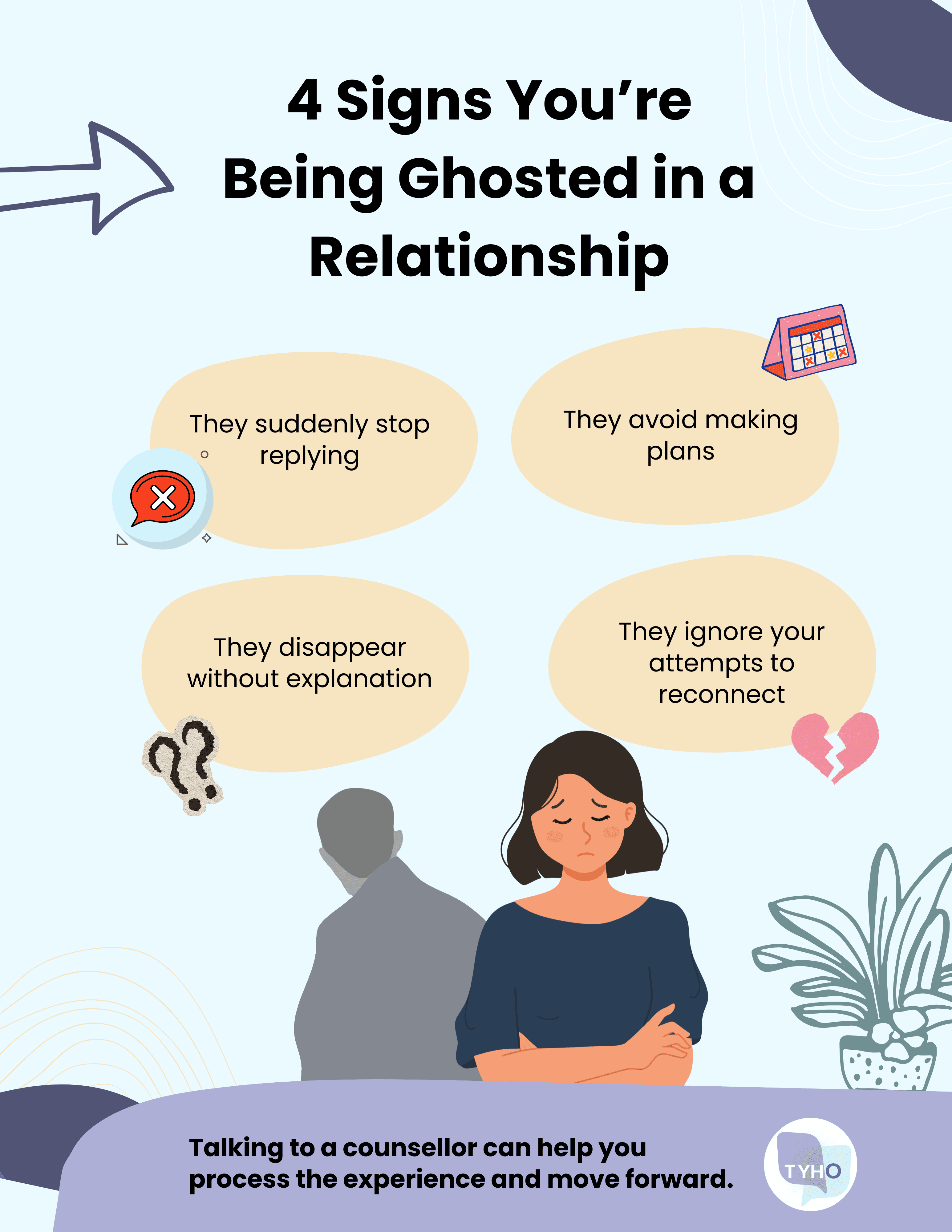
- Gradually reduces contact by avoiding texts, calls or meet-ups (also known as “soft block” or “soft ghosting”)
- Struggles to make commitments
- Gives excuses to slip out of conversations
- Refuses answering questions or refuses to share any details about their personal life
- Exits the conversation when you start to share details of your own life
- Avoids meeting your family members
- Wouldn’t want you to meet their friends or family
- Blocks or unfollows you from all their social media accounts
- Seems disinterested in engaging with you in any degree
Why Do People Ghost
People ghost for many reasons. Complicated relationships, misunderstandings, disagreements, or differences in opinion could be reasons behind ghosting psychology.
Research from 2024 shows that ghosting in relationships occurs because of avoidant attachment styles, mismatched needs, and relationship dissatisfaction.
Other possible reasons why people ghost could include the following:
- They want to avoid confrontation: Some people, especially those terrified of relationship conflict, don’t know how to handle confrontation and avoid it entirely. Most of us may not have experienced healthy family systems growing up, and that could’ve potentially modelled their interaction styles.
- They fear being perceived as a bad person: Some people think rejecting others is mean, and ghosting after dating is the kinder option.
- They are spiralling about how to end the relationship: Sometimes, the person who wants to walk away may end up overthinking and may struggle to find the ‘perfect’ way to end a dynamic. “Their birthday is coming up; wouldn't that be horrible? Their pet just died; what if they cry when we break up?” Ghosting is the easiest solution in such cases.
- They don’t want to explain themselves: Not all relationships end on a positive note, and sometimes it's okay to leave without an explanation. If they believe their partner or friend cannot handle rejection or would bother them for endless closure, they may prefer to ghost instead.

Emotional Effects of Ghosting
If you know from personal experience how it feels to be ghosted, you may be aware that the emotional effects of ghosting can be jarring.
If you’ve been ghosted, your fundamental needs may have been threatened, including:
- Self-esteem
- Sense of emotional boundaries and control
- Belongingness
- Emotional vulnerability
Being ghosted can trigger a flood of feelings and thoughts such as, “They didn’t even want to date me to begin with. Maybe it was all a joke, and I’m not even worthy of an explanation.”
Ghosting and mental health go hand-in-hand in that it can take a toll on your overall individuality and sense of self. If you feel similarly, talking to a therapist may help you better understand your emotions and build your self-worth.

“If it’s out of your hands, it deserves freedom from your mind too.” — Ivan Nuru.
Ghosting in Relationships
What is ghosting in relationships? Ghosting can happen at any stage of a connection, be it when you first start dating or if you’re already in a long-term relationship.
Online dating ghosting also often happens when someone disappears from a dating app or suddenly stops responding to messages. Online dating is when people date through the internet, either because they are long-distance and haven’t met yet, or because they’ve decided to date solely online.
Common examples of ghosting in relationships are:
- Not replying or checking in after a date
- Going AWOL from a frequent dating app or messaging platform
- Suddenly cutting off all communication
- Reading messages but ignoring or avoiding responses
- Seeming active and present on social media but avoiding your presence in specific
How to Deal with Ghosting: 3 Tips
Below is a comprehensive guide to dealing with ghosting. If you’ve been wondering what is ghosting and how to move forward, we hope this section helps you find some peace.
1) Understand Ghosting
Understanding that you’ve been ghosted and coming to terms with the fact can be the first step in dealing with the feelings associated with being ghosted in a relationship.
If you have been ghosted, chances are that the ghoster is simply looking for the ‘easiest way out’ of the relationship (ie without having to communicate).
That being said, always remember that ghosting says more about the one who ghosts rather than the one who was ghosted.
For example, ghosting may mean the person who ghosted struggled to communicate, has an avoidant attachment style, or was scared of conflict. However, being ghosted says nothing about your personality.
2) Don't Take Ghosting Personally
When you invest time and energy in someone you care about, and they leave you without closure, you may feel deeply hurt and upset.
But ask yourself this: If you already invested an X amount of time into trying to build a meaningful connection with the ghoster, would you want to invest more time into ruminating about someone who couldn’t offer you closure?
The point isn't to build resentment, but to collect your energy and turn it toward yourself. Pour your time and energy into yourself with self-compassion and nourish your mind and body with what you need.
3) Reframe Being Ghosted
Think of being ghosted as people filtering themselves out of your life. It removed the mental effort for you automatically. Yes, it does hurt, and it’s valid for you to feel heartbroken and upset.
However, you can reframe it once you’re ready to move on from being ghosted.
Now, it’s time for you to seek connections in your life who value honesty, open communication, and integrity.
How to Recover from Being Ghosted
Being ghosted can leave you with a lot of unanswered questions, but you don't have to spend all your time trying to figure out why someone disappeared.
The following may help you recover from being ghosted:
- Talk to someone you trust: Share what happened with a friend instead of keeping it all in your head. Sometimes saying it out loud can help you see things more clearly.
- Redirect your energy: Pour your attention back into things that make you feel good.
- Let yourself feel disappointed: You don't have to pretend you don't care. Being hurt or confused after being ghosted is normal.
- Focus on the people who show up: Spend time with friends and people who make an effort to stay connected. Their presence can remind you that one person's silence doesn't define your relationships.
Above all, if you were ghosted by someone you trusted and loved, talking to a counsellor in Singapore can help you cope with your feelings of frustration and anger.

Frequently Asked Questions
1) What does ghosting mean?
Ghosting means when someone avoids responding to your texts or messages for a long period of time, either in a short-term or long-term relationship.
2) Why do people ghost someone?
People may ghost for several reasons, including but not limited to:
- Fear of confrontation
- Fear of conflicts
- Lack of interest in maintaining the relationship
- Unmet needs in the dynamic
- Avoidant personality
- Trauma response due to negative relationship experiences
3) Is ghosting emotional abuse?
Ghosting can be a form of emotional abuse, especially if it is done as a form of emotional manipulation multiple times.
Therapists often mention that the push-pull dynamic is a relationship red flag, and it’s important to stay wary of such patterns. If you’ve experienced emotional abuse of any kind, please reach out to one of our therapists in Singapore.
4) Why does ghosting hurt?
Ghosting hurts because the sudden absence of someone you deeply loved can feel like a mind game. Your brain could loop around, trying to analyse every detail of your time together, wondering if you’d missed something or if you were at fault.
Being ghosted can make you doubt every aspect of yourself, and the unanswered questions could feel like a constant itch in your brain that you cannot scratch.
Although being ghosted can be very painful, you’re not alone; recovering from ghosting is possible. Counsellors at TYHO help nearly 16% of people with controlling and managing their emotions or responding appropriately to certain situations, including being ghosted.
Talk to someone today and get the help you may need.
Final Word
One thing we’d like to tell you about ghosting: context matters.
Not all ghosting is the same, and not all silence is malicious.
While painful, ghosting mainly reflects issues within relationships. That is, people are likely to ghost when their needs go unmet or when they fear conflict. Communication may help, but it’s not guaranteed that everyone will do so.
What you could focus on is this: relationships require maintenance, and the effort has to come from both parties.
If a dynamic doesn’t serve you, try reflecting on how you can move away from it. Remember the quote: you can’t pour from an empty cup?
Let’s start investing our energy into relationships that nurture and value us. 💜