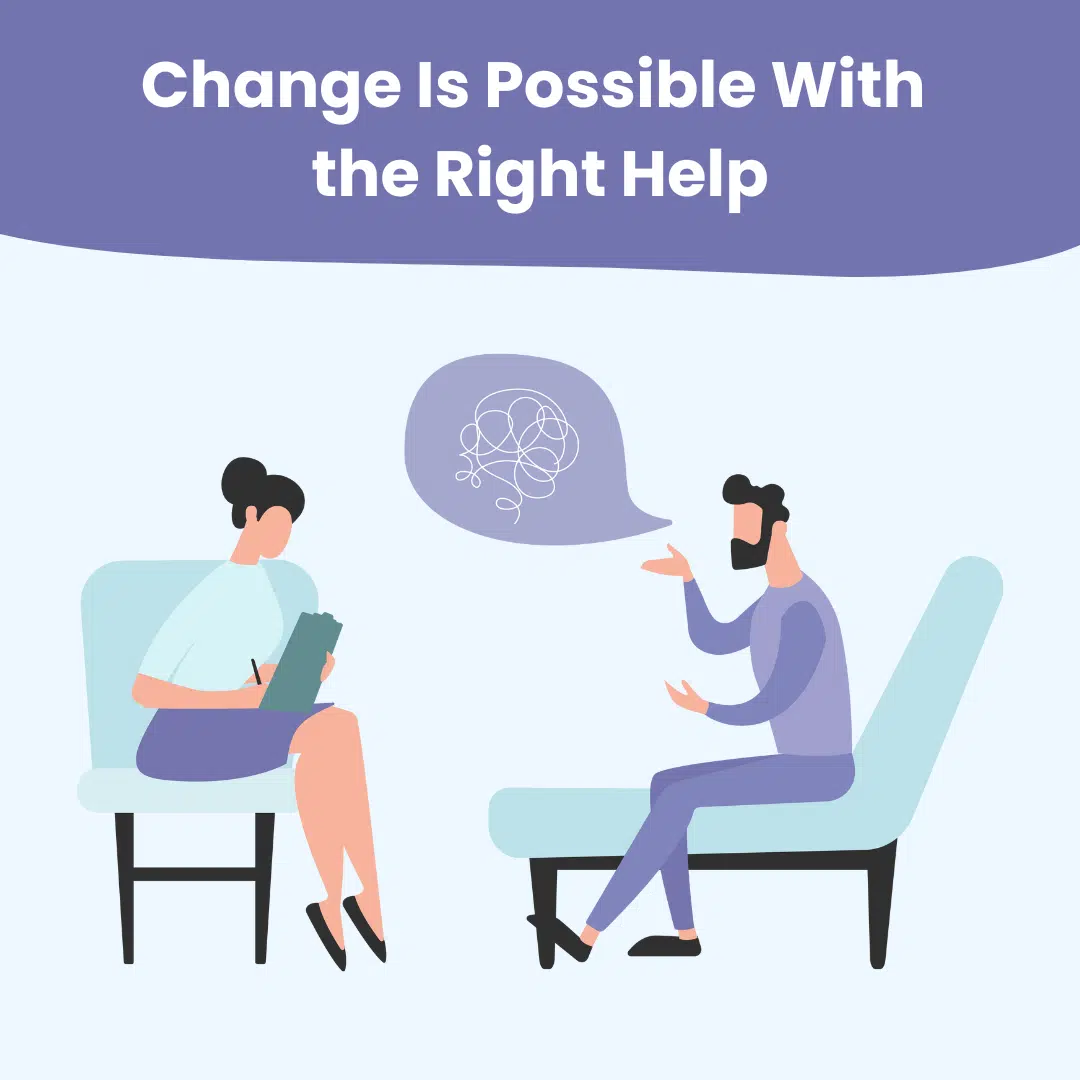

Let’s be real: mental health or therapy is not a comfortable topic for most men. From a young age, boys are taught to ‘toughen up’, ‘Be a man’ or Don’t cry.’
In reality, these lessons can make it hard for men to express their emotions or seek help later in life, affecting mental health in ways society often overlooks.
Today, 6 million men suffer from depression every year. Over 40% of them won’t talk to anyone about it.
Why? Because men are taught to hold back from concepts like vulnerability, openness, and emotional expressions – the very qualities that make us human.
If you’re a man reading this, there is one thing that can help you reconnect with your authentic self and care for your mental health: therapy.
In this article, read about the 7 benefits of therapy for men (and how therapy is a courageous way to care for your mental well-being and strengthen your resilience).
Introduction to TYHO
TYHO provides in-person and online therapy in Singapore. Our platform connects clients to vetted and experienced Psychotherapists, Psychologists, and Counsellors in Singapore. We refer to all our mental health professionals collectively as "Therapists", given the overlap in their scopes of practice. A majority of our Therapists are members of recognised bodies such as the Singapore Association for Counselling (SAC) and the Singapore Psychological Society (SPS). If you'd like help with selecting someone suitable, WhatsApp us at +65 9831 0005 or email us at [email protected].

Mental Health Support for Men
The societal pressure on men to always appear strong and handle everything on their own is unrealistic at best and may create real emotional challenges at worst.
Many men struggle in silence. Some may not even realise that asking for help is an option, lest it make them seem weak or incapable.
But men’s mental health matters. You matter. In fact, it’s often under-discussed by everyone. And more importantly, reaching out for support is a sign of strength and not weakness.
It’s a well-known fact that globally, men are less likely to seek therapy than women. Yet, did you know that they may face mental health challenges significantly more?
The dichotomy between the number of men who could benefit from support and those who actually seek it highlights the importance of open, compassionate conversations about men's mental well-being.
Hence, we hope that this article acts as a starting point for you to discuss the 7 benefits of therapy for men and consider getting started with the support such as counselling services.
Stigma Around Therapy for Men
As discussed in the previous section, society paints therapy as something people turn to only in difficult times.
This is true, especially for men, who may not talk to a therapist even when things are quite challenging. Many grow up with the deep-rooted belief that they should manage problems on their own
However, research tells us a different story. It shows that trying to manage everything on their own may sometimes lead to patterns of behavior that create stress or tension in relationships, often without even realising it).
This means that healing often involves recognising what’s within your control and caring for yourself in ways that feel safe and supportive. Professional counseling for men provides a space to explore these steps.
Therapists are trained to keep the focus on you, providing a supportive space where you can explore your experiences and take steps toward well-being at your own pace.
Back to the main idea, as the stigma is slowly changing, thanks to millennials and members of Generation Z talking about it on social media, more men are opening up about their experiences and talking about mental health.
However, the progress made through therapy can be strengthened when you, as an individual, recognise the value of therapy for your own well-being.
Let’s look into the seven key benefits that men can experience by seeking counselling in Singapore.

7 Ways Therapy Supports Men’s Mental Health and Healing
You might feel that therapy isn’t necessary for you, but it may still offer guidance, support, and tools to help you navigate different areas of life.
Did you know that therapy can help you in many other areas of life? Think along the lines of goal-setting, improving relationships, and learning to let go of things that hold you back from being your best self.
Yes, talking to a counsellor can support in various ways. In this section, we look into the 7 benefits of therapy for men.
1) Navigating the ‘Male Identity’
Society has a strong definition of ‘the ideal man’. 'Be smart, don’t care, don’t feel, and don’t react'. These rules make it quite hard to be a human, don’t you think?
The shadow of a suggestion of the male identity that you struggle with is one that may have been learned through:
- Media and advertising
- Cultural and societal expectations
- Family upbringing
- Role models like your father or ancestors
What does it even mean to be a man today? Is it the same as how your father wore the idea of masculinity?
Probably not. Many men find it challenging to define their own identities, which may be due to experiences like an absent father (or, perhaps, an unhelpful parent).
In therapy, you may find space to reflect on and shape your own understanding of masculinity.
For example, a man raised to believe that expressing sadness is shameful may discover in therapy that acknowledging and processing emotions can be a sign of strength and resilience.
2) Improving Relationships
In general, men tend to approach relationships with a logical mindset. Logic may sometimes override emotions altogether.
Many men grow up hearing messages that may discourage having open conversations about feelings. The lack of emotional availability may leave your partner in the dark, and can sometimes create distance or misunderstandings in relationships.
Here’s a pattern you may notice:
Do you catch yourself trying to ‘fix’ the problem instead of holding space for yourself or your partner? Do you sometimes set aside your emotions and focus mainly on actions or solutions?
These patterns may develop when emotional expression has not been widely encouraged.
If it feels hard to start therapy, it can help to think of it as an emotional gym. You’re talking to a psychologist to exercise those expression muscles. A bicep in the brain may look funny, but it certainly helps you express your emotions with clarity.
Once you can express yourself, you can be present and calm and create a safe space in a relationship. The arguments can turn into healthy conversations. And the anger is replaced with trust and patience.
Alternatively, you can also explore seeking couples counselling along with your partner.
When to seek therapy
Remember, seeing a therapist in Singapore does not mean that you have a problem with communication or intimacy.
Sometimes, it can simply mean that you wish to be a better version of yourself. Other times, it can mean that you’re adding more therapeutic ‘tools’ to your toolbox, which can come in handy when you’ve to resolve a conflict.
Your partner may also see the difference in you and may be inspired to go on their own mental health journey. You may also consider seeking couples therapy.
In conclusion, you can seek therapy whenever you feel distressed or upset, either due to a daily stressor or a long-lasting condition like generalised anxiety.
Asking ‘when to seek therapy?’ is like asking ‘When to go to the gym?’
I’m sure you know the answer already: Now is always the best time!
3) Learning How to be a (Better) Person
We all have blind spots – parts of ourselves we don’t truly understand (or want to avoid).
Talking to a therapist is like talking to a mirror. Have you heard of the Mirror of Erised? Potterheads sure have.
The mirror of Erised shows you your desires, needs, and your truest self. But unlike the magic mirror, therapy helps you understand why those desires exist in the first place and how you can face them with confidence.
Facing your true self is nerve-wracking, but it’s where the growth actually happens. A good psychotherapist helps you turn your insight into action, whether it’s recognising emotional triggers and maladaptive behaviours, questioning harmful beliefs, or changing how you perceive the world.
3 Steps to grow as an individual
- Reflect on behaviour: Keep a journal of your daily thoughts and write about how you react to situations, what you feel, and what you think is the ideal response.
- Identify triggers: As you journal, you may notice repetitive patterns that trigger your emotional reaction. Catch yourself whenever you’re reacting in autopilot mode, and reflect on alternative ways to handle the situation.
- Set personal goals: During therapy sessions, try going over your personal goals with your therapist. You may create a roadmap of timelines, therapeutic interventions, and tools required to achieve your goals.
4) Improving Men’s Emotional Health
For many men, expressing emotions is like talking in a language they were never taught.
If you relate to the above, imagine therapy as a space for you to learn the language of emotions. You might feel things deeply but struggle to articulate them. Or, you may have suppressed your feelings so deeply that you’ve started to feel numb.
A good therapist will not only help you learn how to identify emotions, but also learn how to express, regulate, and process them in a way that works for you.
Take Blue, for example. He’s a man in his late 30s who always considered himself calm and collected. But anytime he was faced with difficulties – at work or in his personal life – Blue would turn to alcohol as a way to cope.
It helped him ‘take the edge off’, or so he thought. What he didn’t realise was that drinking had become his default way of pushing aside difficult emptions. He found it difficult to explain his feelings; he knew he needed to escape it.
In this scenario, Blue can seek therapy to:
- Discover and explore long-standing emotions
- Learn therapeutic skills from Emotionally-Focused Therapy (EFT) to better understand and process his emotions
- Practice coping strategies that support his well-being
- Reflect on and set boundaries with himself, at work and in his personal life and relationships
Change often takes time. But when it does happen, you may walk away with a whole new emotional vocabulary.

Seeking professional help takes a lot of courage. Help is available
Book a Session today5) Managing Rage or Anger
Anger is one of the few emotions society allows men to express openly and frequently. At the same time, many men may not have had opportunities to learn ways to understand or express anger in ways that feel constructive or supportive.
One of the benefits of therapy for men is to explore the root causes of anger. Is it sadness? Fear? Or shame? Whatever it is, anger may be the surface emotion connected to others.
In therapy, you can explore practical ways to manage anger, such as:
- Breathing or mindfulness techniques
- Identifying early signs that anger is beginning to surface
- Learning to communicate assertively (instead of aggressively)
- Recognising the difference between anger and other emotions like frustration or disappointment
6) Overcoming Feelings of Isolation
The core idea of masculinity often revolves around being independent — handling things on your own, not relying on others, and ‘standing strong’ no matter what.
While independence can be a good thing, society has pushed this idea so far that it may turn into loneliness.
The pressure to be independent keeps building, until suddenly, you’re dealing with a major crisis all alone, with no support from friends, family, or community.
Therapy creates a non-judgmental space to explore the reasons behind feelings of loneliness and disconnection. For example, you can:
- Identify the underlying fears and beliefs that may have contributed to loneliness
- Start to recognise and express emotions that may have been buried
- Learn be gentle with yourself through better self-care and self-compassion
- Develop healthy ways to connect with others
- Reflect on limiting masculine norms that equate independence with isolation
- Discover ways to be your authentic self
- Build communication skills that improve your relationships

7) Learning to Let Go
Learning to let go (of hard feelings, complicated relationships, or childhood trauma) is hard for everyone, let alone men.
You may wish to move forward from past experiences but may not know how. This is where therapy can offer support and guidance.
Counselling in Singapore means that you can find a space to explore your such past experiences and the impact they may have on your life. A therapist helps you understand how these past experiences shape your emotions, thoughts, and behaviours today.
Letting go isn’t about forgetting the past; it’s about freeing yourself from its weight. And therapists help you do it in a safe and supportive way.
Therapy is thus a safe space for men to work towards personal development on various fronts, with the professional support of a trained therapist.
Key Takeaways
Working on yourself can be a courageous and meaningful step.
Below are some key points from this article:
Toxic gender roles and societal expectations can make it harder for men to seek help. However, mental health support can play an important role in helping men improve their well-being.
Therapy can help navigate feelings of isolation, emotional difficulties, and anger and help improve the overall quality of your life.
The stigma around therapy for men is real, but so is change. By speaking up about your experiences, you’re changing the generational patterns that have made it difficult for men to be vulnerable and emotionally open.
If there’s one thing you’re taking away from this article, let it be this: Therapy can be a valuable resource for men to strengthen their mental well-being and resilience.
Begin your therapy journey with TYHO when you feel ready to reflect and work on your identity and personal growth!

About the Reviewer
Glennamarie MeenachiClinical Psychologist
Glennamarie is a clinical psychologist practising since July 2020, registered with the Malaysian Allied Health Professions Council (MAHPC (CP) 00265) and a Full International Member of the Singapore Psychological Society (FM023020M). She works with mood instability, work-related stress, anxiety, depression, self-esteem, trauma, bipolar disorder, OCD, ADHD and PTSD, conducts psychological assessments for neurodevelopmental conditions (ADHD, ASD, SLD), and previously served as a Crisis Support Officer in vulnerable communities. She reviews TYHO articles for clinical accuracy.
Read more about our editorial process.
View full profile- Master of Clinical Psychology (MClinPsych), University of Cyberjaya (Malaysia)
- Bachelor of Science in Psychology (BSc Psychology), Centro Escolar University (Philippines)
- Standard Mental Health First Aider
- Certified Crisis Support Officer (WAO)
- Malaysian Allied Health Professions Council, Registered Allied Health Practitioner (MAHPC (CP) 00265)
- Singapore Psychological Society, International Full Member (SPS: FM023020M)
- Malaysian Society of Clinical Psychology, Full Member (MSCP: CP1-0350)
- American Psychological Association, International Affiliate (APA: C2405020803)