
Have you ever wondered if there’s a secret to building the best relationship?
Rather than a quick fix or guaranteed solution, many relationships are shaped over time through ongoing effort, communication, and a willingness to work through challenges together, sometimes with the support of couples counselling, and sometimes through their own experience.
This may not feel as simple as an instant solution, but relationship change often involves patience, reflection, and consistent effort from both partners.
At times, couples may not have the tools or language to navigate certain challenges, which can contribute to recurring patterns, emotional distance, and difficulty with intimacy.
You may feel ready to explore couples therapy because you believe the relationship could benefit from additional support, while your partner may feel unsure or hesitant. This difference in readiness is common, and can be influenced by many factors, including personal beliefs, past experiences, or concerns about therapy.
When the topic comes up, it’s also possible to encounter hesitation or resistance. For some people, therapy may be unfamiliar, misunderstood, or influenced by stigma, which can affect how they respond to the idea.
This article offers some gentle considerations and approaches that may help you have a more open and supportive conversation with your partner about exploring couples counselling together.
Introduction to TYHO
Our platform connects clients to vetted and experienced Therapists in Singapore who are well qualified in providing couples therapy and marriage counselling - both in-person as well as online therapy. A majority of our Therapists are members of recognised bodies such as the Singapore Association for Counselling (SAC) and the Singapore Psychological Society (SPS). If you'd like help with selecting someone suitable for relationship counselling in Singapore, WhatsApp us at +65 9831 0005 or email us at [email protected].

“Even a marriage that is about to hit rock bottom can be revived with the right intervention.” – Dr. Gottman
5 Steps To Encourage Your Partner To Try Couples Counselling
When you date or get married, relationship counselling may be the last thing on your mind.
However, what most are not aware of is that professional support can:
- Prepare you to enter a new relationship in the first place
- Teach you how to navigate moving in or living together
- Expand your mutual love and respect towards each other
If you feel ready to speak with a counsellor but your partner is not, there may be ways to approach the conversation that feel more open and supportive for both of you. The following section explores five suggestions that may help:
1) Pitch Your Idea
How do you first initiate the conversation? Here are some ideas. You might try saying:
“Can I talk to you about something that’s been on my mind lately?”
If your partner is open to listening, you could continue with something like:
“I've been thinking about what both of us want for our relationship. I want us to feel like this is a great relationship where we feel heard, loved, and accepted for who we are. Although we have this right now, I wonder whether this is all we can do for ourselves?”
An open-ended question such as the above can elicit curiosity and a feeling of affection. Your openness shows that you care and may make your partner feel loved.
Try to maintain a gentle and suggestive tone when the conversation goes forward. Rushing into the topic (ie talking to a couples counsellor) right away can make your partner feel defensive or scared.
Tips to Pitch!
If you are bothered or worried about a specific issue in your relationship, such as finances, mental health issues, or low self-esteem, it may help to speak from your own experience using “I” statements.
For example, you might say: “I feel unhappy and gloomy these days, and I’m worried it’s also affecting our relationship. If you’re also willing to explore our issues more deeply, maybe we could try to talk to a couples counsellor in Singapore?”
If you want to try counselling for other reasons, such as feeling prepared to handle future conflicts or learning more about your relationship from a fresh perspective, shift the conversation away from yourself.
Try saying: “I’ve been reading so much about couples therapy. I think it could be fun to explore it ourselves. What do you think?”
2) Connect Emotionally and Appropriately
Connecting emotionally means that you’re being kind and compassionate – to yourself and your partner.
It can be helpful to avoid framing the situation in highly intense or absolute terms, as this may make it harder for both partners to feel open and grounded in the discussion.
Instead, focusing on how you feel and what you’re experiencing can support a more receptive conversation. Strong emotions such as anger or frustration are valid, but if they become the main tone of the discussion, it may be harder for both partners to feel heard and understood in that moment. If needed, it can be helpful to pause and return to the conversation when things feel calmer.
Before bringing up more sensitive topics like counselling, some couples find it helpful to first reconnect in ways that feel natural and comfortable. This might involve spending relaxed time together, such as watching a movie, engaging in a shared activity, or doing something light and enjoyable.
To let yourself loose, try:
- Watching a movie together
- Doing art
- Playing games with your partner
Once you feel emotionally connected to your partner, bring up the benefits of counselling sessions. When couples reach this point of openness, many also find that marriage counselling is effective in strengthening communication and rebuilding trust in marriage (especially if that's one of your goals as a couple).
Tip: If you’ve previously been to individual therapy, talk about the changes you’ve seen in yourself after seeking support. Recall any specific techniques or insights you may have gained and bring them up in the conversation. Talk about very specific examples of how a psychologist has helped you. If you’ve not been to therapy before, you may also talk about the benefits in general or share your friend’s experience seeking support.
3) Talk About Collaboration
Research shows that Emotionally Focused Couples Therapy can improve satisfaction and emotional connection in a relationship. The experts from the study also followed up with couples who experienced the positive benefits.
Follow-up findings indicate that the participants noted that they had a better understanding of how each other’s reaction affects the other.
EFT focuses on helping couples recognise and understand recurring interaction cycles, and to develop more supportive ways of responding to one another. This may include working through patterns such as withdrawal, escalating conflict, or difficulty expressing emotional needs in a safe and constructive way.
When discussing couples therapy with a partner, it can sometimes be helpful to share information in a neutral, non-pressuring way. This might include explaining that therapy is often a collaborative process aimed at improving communication and understanding.
Mention the importance of collaboration in a relationship. This is especially helpful if your partner misunderstands therapy as an intervention that only helps couples with serious issues.
Some people find it useful to gently address common misconceptions about counselling, such as the idea that therapy is only for crisis situations. In reality, couples may seek support at many different stages of a relationship, including when they want to strengthen connection or improve communication.
A relationship can be thought of as being similar to a well-functioning clock. It needs ongoing mutual effort and adjustment from both partners, where both people contribute to maintaining connection and understanding over time. Which is precisely what your Singaporean couples counsellor can help with.
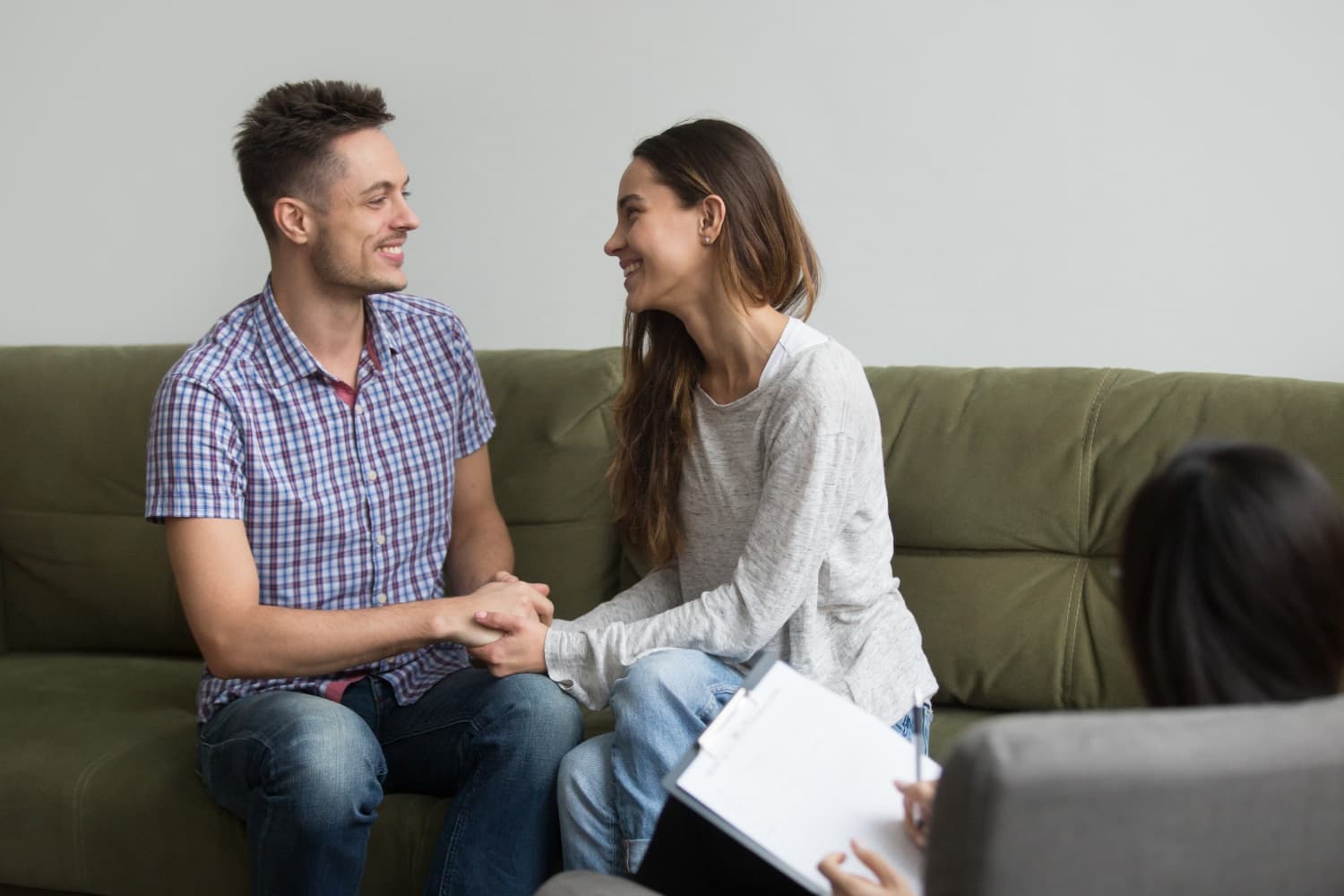
4) Bridge the Gap in Each Other’s Idea of Couples Therapy
Assuming that both of you are considering talking to a couples therapist, what now?
If you’re both open to speaking with a couples therapist, what comes next?
At this stage, it may be helpful to gently explore each other’s perspectives on:
- Your relationship
- Your individual experiences
- Relationship counselling
- Why you're considering to seek counselling as couples
Rather than needing complete clarity right away, this can be a process of understanding what is bringing you to this point and what feels important to each of you. People consider seeking counselling for a wide range of reasons, such as:
- Improving communication
- Learning ways to navigate conflict more constructively
- Navigating individual mental health challenges that may be affecting the relationship
- Discussing major life decisions such as marriage, children, or living together
- Understanding each other more deeply
- Exploring concerns around or improving emotional or physical intimacy
There is no single “right” reason to seek therapy. Sometimes the reasons are clear, and other times they become clearer over time.
You might find it helpful to ask open-ended questions that invite reflection, such as:
'If you imagine a relationship where you feel most supported and understood, what would that look like for you?'
Responses can vary widely, ranging from very specific needs to more general feelings or concerns. The goal is not to agree with each other immediately, but to understand each other’s perspectives with openness.
It can also be helpful to listen with curiosity rather than defensiveness, and to ask gentle follow-up questions to better understand what your partner is sharing.
It is normal for partners to have different reasons for considering therapy. Differences do not necessarily mean misalignment, they can instead become part of what is explored and understood together in the process.
Over time, this conversation may help you both develop a clearer sense of what you would like to work on in therapy, if and when you decide to begin sessions.

TYHO Therapists can help with relationship conflicts, infidelity, intimacy, marriage counselling, and more.
find a couples counsellor5) Navigate the Logistics
The last step to make sure you have a positive experience while encouraging your partner is to navigate the logistics.
Sometimes, a simple discrepancy in timing can cause a person to avoid support. As the idea of talking to a therapist can be overwhelming, many may come up with excuses to put it off.
To prevent the delay in seeking help, figure out the when, how, and where of couples counselling or marriage counselling in Singapore.
Here are some questions you can brainstorm together:
- What time of the day are you most likely to be free and comfortable to be emotionally present?
- How many times a month are you willing to attend a session?
- Are you most comfortable talking to a counsellor face-to-face? Or would you rather stay in your home and talk to a professional online?
- How much are you willing to pay for the sessions? Can you split it with your partner? How will the split be measured?
As you ask yourself questions, you may start gaining clarity on what works best for you and your partner.
At Talk Your Heart Out (TYHO), we provide both online and in-person counselling in Singapore.
You can shortlist Therapists based on several factors, including but not limited to:
- Their educational qualifications
- Introductory videos
- Therapeutic approaches
- Client reviews
- Personal experience and general approach towards life
Seeking mental health support doesn’t reflect weakness in your relationship. For many couples, it can simply be one of several ways of investing in understanding, communication, and connection. Thus, it shows the amount of love and care you hold for your partner.
Key Takeaways
“You know you’ve found true love when you catch yourself falling in love with the same person over and over again, despite them being miles away from you.” – Frank Lloyd Wright.
And falling in love means you fall in love with the person’s strengths, weaknesses, flaws, and perfections – over and over again.
Sometimes, love comes easily. At other times, it may require intention, care, and ongoing effort from both partners.
If you’re unsure how to navigate that effort, couples counsellors can help. If your partner feels unsure about seeking help, it may be useful to approach the conversation with patience and openness rather than pressure. Here are some ways that may help support that conversation:
Pitch your idea gently and at the right moment (find a calm time to talk, or begin with a relaxed shared activity before bringing up deeper topics)
Connect emotionally before addressing the topic (watch a movie or take a walk to loosen up)
Talk about collaboration (therapy is proof of mutual effort and respect towards each other)
Bridge the gap (identify any discrepancies in your and your partner’s idea of seeking counselling)
Navigate the logistics (figure out when, how, and where you want to seek support and make sure your needs align with your partner’s)
If there’s one takeaway from this article, we hope it’s this:Couples counsellingcan be a meaningful space to support communication, understanding and connection in a relationship. Book your first session today!

About the Reviewer
Glennamarie MeenachiClinical Psychologist
Glennamarie is a clinical psychologist practising since July 2020, registered with the Malaysian Allied Health Professions Council (MAHPC (CP) 00265) and a Full International Member of the Singapore Psychological Society (FM023020M). She works with mood instability, work-related stress, anxiety, depression, self-esteem, trauma, bipolar disorder, OCD, ADHD and PTSD, conducts psychological assessments for neurodevelopmental conditions (ADHD, ASD, SLD), and previously served as a Crisis Support Officer in vulnerable communities. She reviews TYHO articles for clinical accuracy.
Read more about our editorial process.
View full profile- Master of Clinical Psychology (MClinPsych), University of Cyberjaya (Malaysia)
- Bachelor of Science in Psychology (BSc Psychology), Centro Escolar University (Philippines)
- Standard Mental Health First Aider
- Certified Crisis Support Officer (WAO)
- Malaysian Allied Health Professions Council, Registered Allied Health Practitioner (MAHPC (CP) 00265)
- Singapore Psychological Society, International Full Member (SPS: FM023020M)
- Malaysian Society of Clinical Psychology, Full Member (MSCP: CP1-0350)
- American Psychological Association, International Affiliate (APA: C2405020803)