
Did you know that the emotional pain of breakups can activate similar regions of the brain as physical pain?
It’s thus quite understandable that a relationship ending can leave you feeling disoriented, anxious, or emotionally drained
Even when breakups are mutual or expected, they can still stir up difficult emotions, sometimes affecting areas of your life such as self-esteem, daily routine, and overall mental well-being.
The impact of breakups can feel overwhelming at times, especially if you’re going through it on your own. If you choose to seek support, breakup counselling can offer a supportive, non-judgmental space to help you make sense of your experience and explore ways to move toward healing.
Our blog starts by exploring why breakups can feel overwhelming, and goes on to look at different ways in which a counsellor can support you in processing your experience. We end by taking a brief look at the common question ‘How long does it take to get over someone?’ and sharing self-care tips that may be discussed during counselling in Singapore to support you as you cope with a breakup.
Introduction to TYHO
TYHO provides in-person and online therapy in Singapore. Our platform connects clients to vetted and experienced Psychotherapists, Psychologists, and Counsellors in Singapore. We refer to all our mental health professionals collectively as "Therapists", given the overlap in their scopes of practice. A majority of our Therapists are members of recognised bodies such as the Singapore Association for Counselling (SAC) and the Singapore Psychological Society (SPS). If you'd like help with selecting someone suitable, WhatsApp us at +65 9831 0005 or email us at [email protected].

Why Do Breakups Feel Overwhelming?
Breakups can be complex experiences that go beyond the end of a relationship. For some, they may also involve letting go of shared hopes, familiar routines, or a sense of stability that once felt important.
These changes can affect different parts of your life, and it’s natural if things feel unsettled or unfamiliar for a while. Everyone responds differently, some people feel strong emotions, while others may feel numb, relieved, or somewhere in between.
In fact, as we saw at the beginning of the blog, research shows that breakups cause emotional pain that can activate similar areas of the brain as physical pain. This may be one reason why breakups can feel physically taxing for some people, with experiences like low energy, changes in appetite, or disrupted sleep.
Emotionally, you might notice a mix of emotions coming and going, or feelings that are hard to make sense of. This can be especially challenging when balancing everyday responsibilities like work, school, or family life.
In a digitally connected world, reminders of a past relationship can be harder to avoid. Seeing posts, shared connections, or relationship content online may bring up thoughts or feelings that you weren’t expecting.
If you’re navigating a breakup, you don’t have to go through it in a way that feels isolating. Support is available, and if you choose to seek it, counselling can offer a space where you’re listened to without judgment, and where you can take things at a pace that feels right for you.

How Does a Counsellor Help in Coping with Breakups?
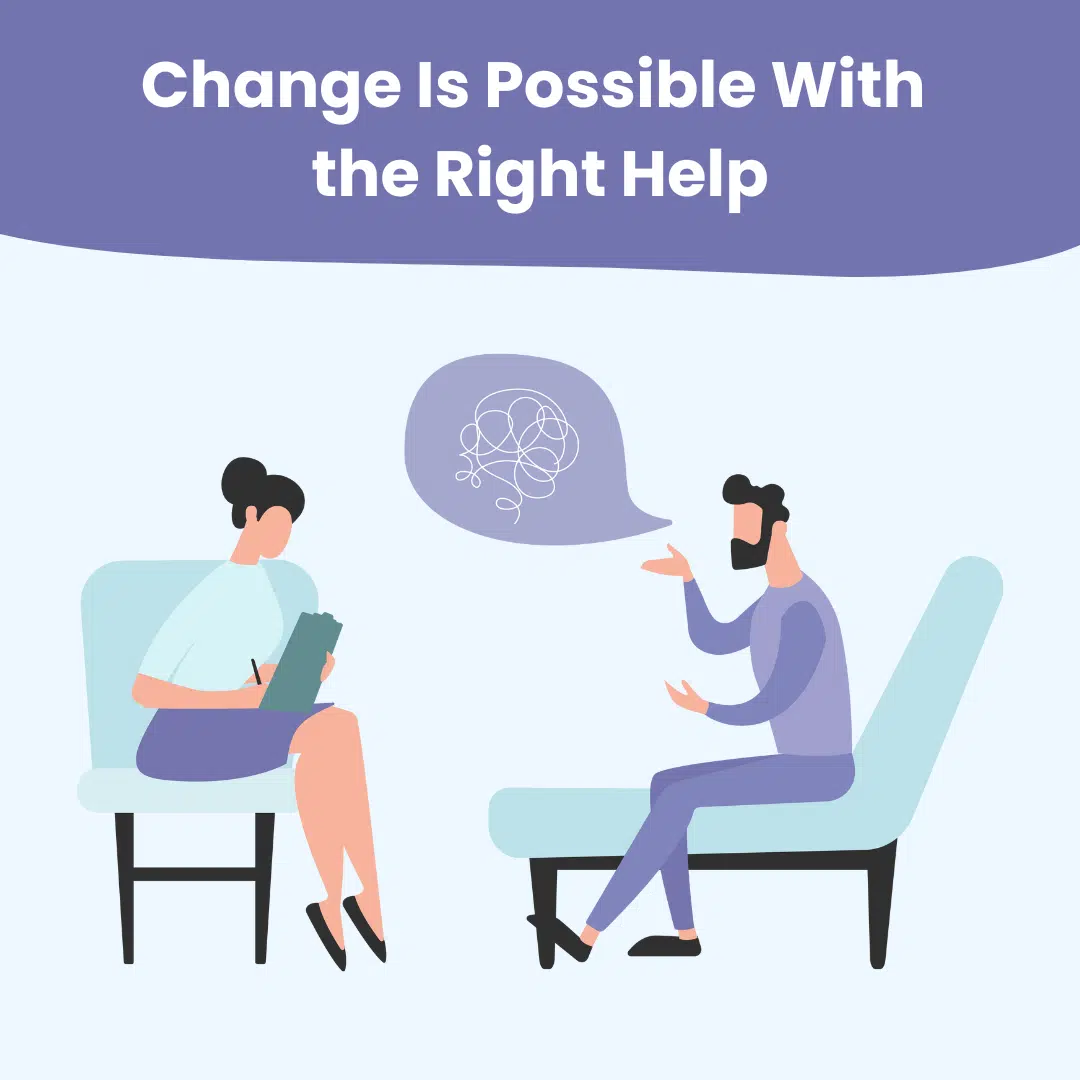
A breakup can bring up a wide range of emotions that may feel difficult to make sense of at times. While support from friends and family can be helpful, you may also find that you need a different kind of space to explore what you’re going through. This is where counsellors may be able to support you. They are trained to offer a safe, supportive, and non-judgmental space where you can talk through your thoughts and feelings at your own pace, in a way that feels comfortable for you.
Let’s take a closer look at how Singapore therapists can support as you navigate your experience and find your own way forward:
1) Learning to Validate & Process Emotions
As we saw earlier, breakups can bring up a wide range of emotions, sometimes all at once. You might notice feelings such as:
- Sadness – for what you valued or hoped for
- Anger – about what felt unfair or hurtful
- Relief – especially if the relationship felt difficult or overwhelming
- Guilt – or self-questioning about what you could have done differently
- Confusion – about your choices or what it all means
- Anxiety – about what comes next.
It's important to remember that all of these feelings are valid. There isn’t a 'right' way to feel after a breakup.
Working with a therapist or other mental health professionals can help you explore these emotions at your own pace, in a way that feels safe and manageable.
Rather than forcing yourself to confront everything at once or setting expectations about how you should process things, it can help to gently notice what comes up and respond with curiosity and care.
Healing is not linear, and it’s okay to take this one step at a time.
2) Developing Coping Mechanisms
Apart from emotions, the impact of breakups can manifest in various ways, such as disturbed sleep patterns, gut issues, or a lack of motivation.
Couples counsellors work with you to build personalised coping strategies and techniques tailored to your situation – eg grounding exercises, journaling, behavioural techniques, etc.
Below are some types of counselling a professional may use to help you in coping with breakups:
- Cognitive restructuring: Helps you challenge and reframe negative thought patterns, eg ‘I’m never going to be able to move on’ → ‘Breakups may be painful but they’re not permanent’.
- Mindfulness techniques: Help deal with rumination and overwhelm by teaching you to sit with difficult emotions. Techniques include the 5-4-3-2-1 method, body scans and deep breathing.
- Value reorientation: Helps find your way back to your authentic values through questions like ‘Who am I outside of this relationship?’, ‘What do I want from future relationships/partners?’.

3) Fostering Understanding & Acceptance
When a relationship ends, it’s natural to replay events in your mind, searching for clarity or closure.
A counsellor can help you explore your experiences more objectively, identify patterns and come to terms with the end of the relationship at a pace that feels right to you.
4) Rebuilding Self-Esteem & Confidence
Breakups can leave your confidence feeling shaky, especially if rejection, infidelity, trust issues or other difficult dynamics were involved.
Through supportive conversations and proven techniques, counsellors help guide you in not just coping with breakups but also in rebuilding your self-worth, strengthening your identity and boosting self-confidence step by step.
5) Gaining Perspective & Confidence to Move on
Returning to everyday routines after a breakup can sometimes feel unsettling or disorienting.
This is why breakup counselling is not only about making sense of what has happened, but also about supporting you as you move forward. It creates space to reflect on your past relationship while gently exploring what you may want in future connections.
A therapist can work with you to clarify your values, boundaries, and hopes for the future, helping you move ahead with greater self-awareness and emotional resilience, at a pace that feels right for you.
How Long Does it Take to Get Over Someone?
There is no fixed timeline for healing after a breakup and getting over someone. Moving on from a relationship looks different for everyone, and it can take weeks, months, or longer depending on a range of personal and relational factors.
These may include the length and intensity of the relationship, the circumstances of the breakup, and the kinds of support and coping strategies you have available.
A 2007 study found that 71% of the participants experienced significant emotional improvement approximately 11 weeks after a breakup.
While this can offer a general reference point, it’s important to remember that individual experiences vary widely, and healing does not follow a predictable, linear schedule.
For many people, recovery is a gradual and non-linear process, with ups and downs along the way. Giving yourself permission to move at your own pace, while acknowledging grief, reflection, and adjustment, can all be an important part of that process.
With the support of a professional couples counsellor, you can navigate your experience in a structured and compassionate way, building tools and understanding that support your wellbeing over time.
7 Self-Care Tips for Coping with Breakups
Breakups can feel emotionally draining, and taking care of yourself during this time can be an important source of support.
While healing is not linear and unfolds at its own pace, here are some small, intentional acts of self-care may help you feel more grounded and supported as you navigate this period:
1) Let Yourself Feel without Judgement
Just like you practise sitting with your emotions in therapy, it can also be helpful to do so outside of therapy as well.
You might find it useful to allow space for whatever comes up, whether that’s crying, journaling, talking it out, or simply resting. Emotions and memories may ebb and flow, and it’s okay if they feel intense at times.
It can help to remind yourself that emotions are a natural response to change and loss, and they don’t need to be 'fixed' or pushed away in order to be understood and worked through.
2) Create and Stick to a Basic Routine
Especially during the initial days after a breakup, you may not have the physical energy or the emotional bandwidth to return to a full-fledged routine right away.
During this time, it may help to focus on a simplified and flexible structure that supports a sense of stability without adding pressure. This could include small, doable touchpoints such as getting out of bed, showering, eating when you’re able to, and incorporating gentle movement if and when it feels accessible.
Rather than aiming for a 'full routine,' the focus can be on meeting your basic needs in a way that feels manageable for you in the moment.
3) Set Boundaries with Your Ex
It can be helpful to consider setting boundaries with your ex after a breakup, which may include muting, unfollowing, blocking, or taking space from contact, depending on what feels supportive for you.
For some people, ongoing communication, even after a mutual breakup, can feel emotionally overwhelming or make it harder to adjust to the change in the relationship. Creating distance, when it feels right, can offer more space to process feelings, grieve the loss of the relationship, and gradually move forward at your own pace.
4) Make Time to Reconnect with Yourself
Rediscovering old hobbies, exploring new interests, or spending time on activities that feel meaningful or enjoyable to you can be a supportive part of the healing process.
You might find it helpful to reconnect with parts of yourself that feel grounding or familiar, including things you may not have engaged in during the relationship. This isn’t about distancing yourself from the past, but about gently re-establishing your sense of identity outside of the relationship. Over time, these experiences can support a gradual return to yourself in a way that feels natural and self-directed.

5) Reach Out to Friends & Family
Spending time with people you trust can also be a meaningful source of support during a breakup. Feeling heard, understood, or simply being in the presence of safe connections can help you feel less alone as you navigate this period.
At the same time, you might find that adjusting your social environment feels helpful for a while. This can include taking space from mutual friends (with your ex) or shared social circles if interactions feel emotionally complex or overwhelming. If and when it feels right, you can gradually decide what level of connection feels supportive for you.
6) Prioritise Your Physical Health Too
In the emotional intensity of a breakup, it can sometimes feel difficult to focus on physical wellbeing.
You might gently remind yourself that your physical health still matters, and try to meet them in a way that feels realistic for you.
This could include eating regularly when possible and prioritising rest and sleep as your body allows.
Over time, when you feel ready, you may choose to reintroduce more structure or activities that support your wellbeing, such as gentle movement (like walking, stretching, yoga, or other forms of exercise) or calming practices like meditation. The emphasis can be on small, sustainable steps rather than pressure to 'get back to normal' quickly.
7) Practice Techniques & Tools You Learn in Therapy
Therapy can be most supportive when it feels connected to your everyday life, rather than something that exists only within sessions.
You may find it helpful to gently integrate tools and insights from breakup counselling into your day-to-day routine in ways that feel realistic and accessible for you.
Over time, the combination of therapy and self-care practices can help you process your experience and move forward at a pace that feels right for you.
Healing after a breakup takes time, and there is no one-size-fits-all answer to the question, “How long does it take to get over someone?” What matters most is allowing yourself the space to move through the experience at your own pace, while offering yourself kindness, patience, and self-compassion along the way. If you’re finding it difficult to cope with a breakup, reaching out to a counsellor can be a supportive step. Having someone to talk to may help you process what you’re going through and find ways of coping that feel right for you. You deserve support as you heal, in a way that feels gentle, respectful, and aligned with your needs.
Conclusion
Healing after a breakup takes time and that there’s no one-size-fits-all answer to the question ‘How long does it take to get over someone?’.
What matters most is allowing yourself the space to move through the experience at your own pace, while offering yourself kindness, patience, and self-compassion along the way.
If you’re finding it difficult to cope with a breakup, reaching out to a counsellor can be a supportive step. Having someone to talk to may help you process what you’re going through and find ways of coping that feel right for you.
You deserve support as you heal, in a way that feels gentle, respectful, and aligned with your needs. Talk to a TYHO counsellor by clicking on the "Show all counsellors" button below .

About the Reviewer
Glennamarie MeenachiClinical Psychologist
Glennamarie is a clinical psychologist practising since July 2020, registered with the Malaysian Allied Health Professions Council (MAHPC (CP) 00265) and a Full International Member of the Singapore Psychological Society (FM023020M). She works with mood instability, work-related stress, anxiety, depression, self-esteem, trauma, bipolar disorder, OCD, ADHD and PTSD, conducts psychological assessments for neurodevelopmental conditions (ADHD, ASD, SLD), and previously served as a Crisis Support Officer in vulnerable communities. She reviews TYHO articles for clinical accuracy.
Read more about our editorial process.
View full profile- Master of Clinical Psychology (MClinPsych), University of Cyberjaya (Malaysia)
- Bachelor of Science in Psychology (BSc Psychology), Centro Escolar University (Philippines)
- Standard Mental Health First Aider
- Certified Crisis Support Officer (WAO)
- Malaysian Allied Health Professions Council, Registered Allied Health Practitioner (MAHPC (CP) 00265)
- Singapore Psychological Society, International Full Member (SPS: FM023020M)
- Malaysian Society of Clinical Psychology, Full Member (MSCP: CP1-0350)
- American Psychological Association, International Affiliate (APA: C2405020803)