

Insomnia is a sleep disorder characterised by symptoms such as persistent difficulty with falling asleep, staying asleep, or waking up earlier than planned, despite having the adequate time and opportunity to sleep.
It affects roughly 1 in 10 adults as a chronic condition and is the most common sleep disorder that is seen in clinical settings in Singapore.
In a 2025 study by Sleepseeker, Singapore received a 7.20 out of 10 fatigue score, ranking as the most tired country in the world.
Not being able to sleep peacefully and restfully through the night can be an incredibly frustrating and tiring experience. It can have lasting effects, staying with you throughout the day in the form of irritability, fatigue, and mood swings.
In this article, we explore what insomnia is, its symptoms, causes, what happens when it goes untreated, and how counselling can help you manage it better.
TYHO provides in-person and online therapy in Singapore. Our platform connects clients to vetted and experienced Psychotherapists, Psychologists, and Counsellors in Singapore. We refer to all our mental health professionals collectively as "Therapists", given the overlap in their scopes of practice. A majority of our Therapists are members of recognised bodies such as the Singapore Association for Counselling (SAC) and the Singapore Psychological Society (SPS). If you'd like help with selecting someone suitable, WhatsApp us at +65 9831 0005 or email us at [email protected].

Insomnia can be both a standalone condition and a common symptom of anxiety and depression. The relationship runs in both directions: poor sleep worsens mental health, and poor mental health worsens sleep.
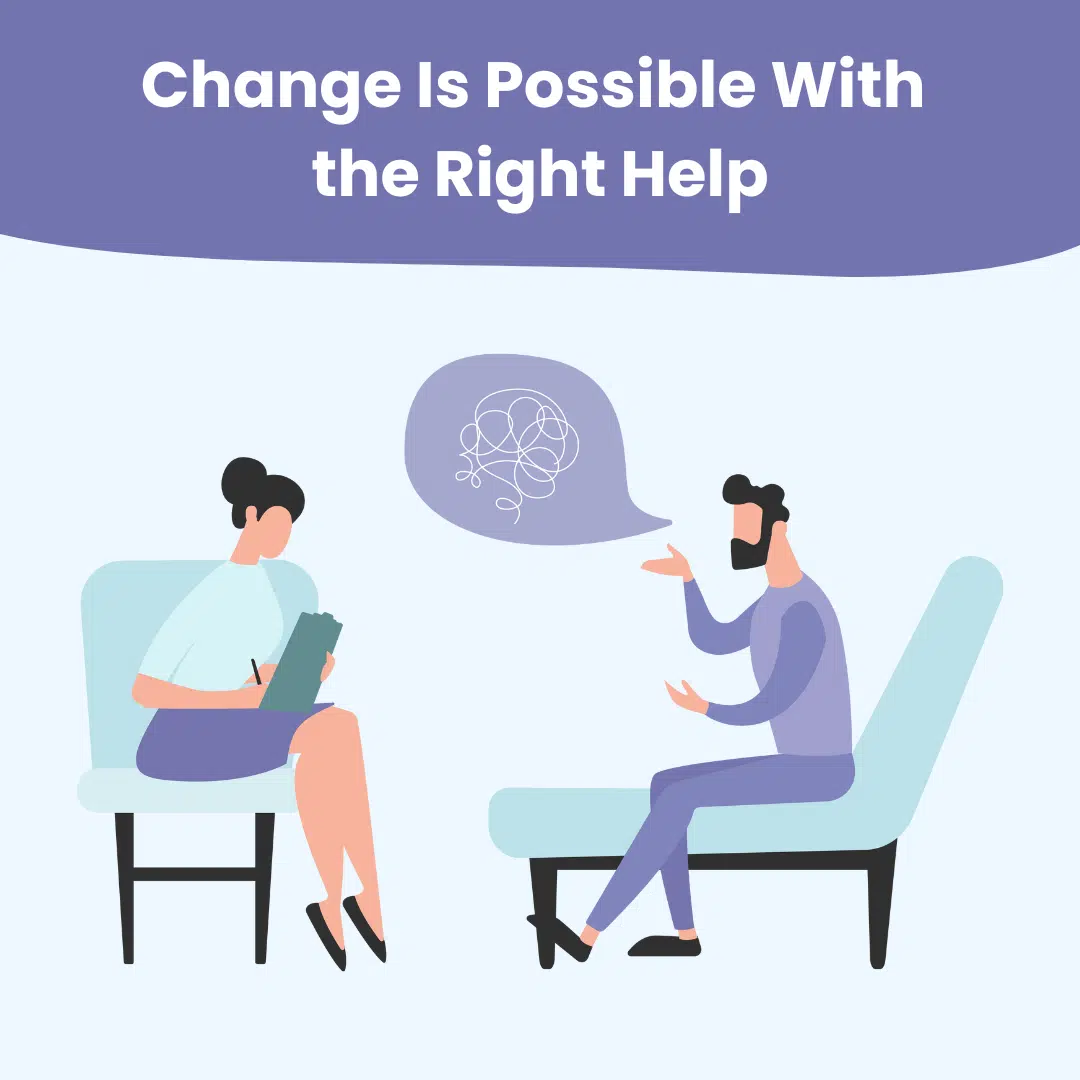
This is why insomnia often needs to be addressed alongside underlying emotional or psychological factors, not just as a sleep problem in isolation. And that’s where counselling comes in as a means of support. A professional Singapore counsellor can help you understand and work through such factors.
Riba is a working professional from Singapore. They work in a high-pressure industry and struggle with insomnia.
Upon starting counselling in Singapore, Riba’s counsellor helps them understand how their work stress and anxiety could be contributing to their sleep issues. Consequently, they work on a plan to set better work-life boundaries as well as grounding tools to manage stress more effectively.
Over time, as their anxiety settles, Riba is able to see noticeable improvements in their sleep patterns as well!
Most adults need around seven to nine hours of sleep per night.
However, it’s important to note that the quality matters as much as quantity. Seven hours of fragmented or disturbed sleep is not the same as seven solid hours of rest.
If you consistently wake up feeling unrefreshed, the problem may be with your sleep quality rather than duration.
Chronic insomnia can be defined by the presence of the four criteria listed below:
These terms are often used interchangeably, but they mean different things.
Sleep deprivation means that you're not getting enough sleep due to some current circumstances in your life. For instance, this can be due to work demands, having a newborn, commuting long distances, etc. The fix here is time and opportunity. Insomnia, on the other hand, is different. You have the time, but sleep still doesn't come or doesn't stay. The problem is the sleep itself.
A sleep disorder is a broader category. Insomnia is a type of sleep disorder, but so are sleep apnoea (breathing that repeatedly stops during sleep), restless legs syndrome, and narcolepsy. If you're sleeping eight hours but still feel exhausted, or if your partner reports that you stop breathing, a different sleep disorder may be involved. A GP can help you distinguish between them.
SingHealth estimates that around 1 in 3 Singaporeans experience at least one form of sleep disorder. Insomnia is the most common one, but sleep apnoea is also significantly underdiagnosed in Singapore.
It’s crucial to understand that insomnia doesn't look the same for everyone. While some people can't fall asleep, others drop off easily but wake repeatedly, and others wake at 4 AM and can't return to sleep.
That said, there are some common symptoms that may appear in most kinds of insomnia. These are:
If it takes you more than 30 minutes to fall asleep on most nights, this could be a clinical marker of sleep-onset insomnia.
Over time, your bed, which is supposed to be a safe space, can itself become a source of anxiety instead of rest. Psychologists call this psychophysiological insomnia: a learned association between the bedroom and wakefulness.
Waking once or twice during the night is normal. However, if you find yourself waking repeatedly and struggling to return to sleep, this could be a sign that something else, such as insomnia, could be the issue.
This pattern is also associated with both anxiety and depression, and tends to worsen with age.
Waking significantly earlier than you planned to and being unable to return to sleep after you wake up is a recognised symptom of insomnia as well as depression.
If this happens regularly alongside low mood, it might be worth mentioning both to a professional counsellor or psychologist.
Sleep restores your cognitive function. Without enough of it, you may experience:
In fact, all major sleep authorities flag driving while sleep-deprived as comparable in risk to driving after drinking.
After one or two poor nights of sleep, it’s natural for most people to become shorter-tempered and more reactive. When insomnia is ongoing, those mood effects start to accumulate and may show up as:

Understanding which type of insomnia you’re experiencing can help clarify what could be driving it and what's most likely to help. Some common types include:
Short-term insomnia that is triggered by a specific event. Examples may include the loss of a loved one, job loss, an exam, or a break-up. It typically resolves once the stressor passes.
Sleep difficulties that persist for at least three nights per week for three months or more might indicate chronic insomnia.
Chronic insomnia may become a self-reinforcing loop. That is, poor sleep creates worry about sleeping, which keeps you awake, which in turn makes you worry more.
Breaking this cycle usually requires active intervention. A trained mental health professional, such as a Singapore therapist, can help you create tailored and actionable strategies that help break such cycles of sleeplessness.
If you find it difficult to fall asleep at the start of the night, this is usually onset insomnia.
This kind of insomnia is closely associated with anxiety, where the mind won't switch off when the body is ready to rest.
People with maintenance insomnia will generally be able to fall asleep, but experience difficulty with staying asleep or maintaining sleep. The end result is that rest doesn’t feel restorative, but feels disturbed, fitful, and thus tiring instead.
Some ways this can happen are:
Maintenance insomnia is associated with both anxiety and depression.
As with any other mental health or physical health issue, insomnia rarely has a single cause. Several factors, such as psychological, physical, and lifestyle factors, usually work together.
That being said, the following are some common causes that could contribute to or exacerbate insomnia:
Stress is the most common trigger for those experiencing insomnia. Under sustained pressure, your body's threat-response system starts to stay activated. This can show up as an increase in cortisol levels and alertness, which makes it harder to fall asleep.
Apart from general stress and anxiety, sleep anxiety is a specific kind of anxiety that involves feeling distressed about not sleeping. It is particularly common in those with chronic insomnia and can often become a bigger driver of sleeplessness than the original stressor itself.
John is a doctoral student from Singapore who is planning to get married soon. For the past four months, he has been experiencing regular and increasing difficulties with sleep.
When a close friend suggests therapy, John decides to reach out to a Singapore therapist trained in CBT-I.
Therapy helps John understand that his sleep issues stem from the stress of planning his wedding alongside his doctoral thesis. Together, they work out an action plan to set better boundaries between the two, plan and delegate tasks wherever possible and also allocate time for self-care.
Depression and insomnia frequently occur together, ie, one can trigger the other, or both can occur in parallel.
Waking up in the early hours of the morning is one of the recognised symptoms of depression. However, other forms of emotional distress, such as unprocessed grief, unaddressed trauma, phobias and fears can also disrupt sleep in similar ways. Insomnia shows up as a physical symptom for most types of emotional distress.
Although mental health factors such as the ones discussed above are often linked to insomnia, poor lifestyle factors can also have a significant impact on one’s sleep. These can include:

The effects of insomnia go well beyond just tiredness. Continued sleep disturbances can start affecting your everyday life, eg, in the ways you think, feel, and connect with others.
Some of the common effects of insomnia on a person’s daily life and mental health are:
For those with mild or short-term insomnia, a combination of self-care strategies, lifestyle/behavioural changes, and grounding techniques can help improve sleep quality over time.
However, if you’re experiencing insomnia that significantly affects your everyday life, it’s always advisable to work on a care plan alongside your therapist or psychologist.
Below are four strategies that mental health professionals may recommend as part of CBT-I (Cognitive Behavioural Therapy for Insomnia):
Remember that you don’t have to experience a certain ‘level’ of distress in order to seek help. In fact, professional support is often beneficial to those dealing with mild insomnia as well.
Seeking help is always a sign of strength, not of weakness.
Additionally, starting counselling early can result in quicker intervention and improved results before insomnia becomes more challenging.
Having said that, here are some signs that show that it might help to speak with a Therapist:
If you’re experiencing one or more of the above, we encourage you to consider counselling. At TYHO, we offer counselling in Singapore with professionals experienced in insomnia and other mental health difficulties that often accompany it.

One of the most effective psychological treatments for chronic insomnia is Cognitive Behavioural Therapy for Insomnia (CBT-I). It is widely recommended as a first-line treatment before sleep medication by clinical guidelines globally, including in Singapore.
CBT-I typically takes place over six to eight sessions and may use a combination of the following:
In addition to CBT-I, Therapists can also help address underlying mental health issues such as anxiety, depression, or stress that may be driving the insomnia. For many people, treating sleep difficulties is often much more effective when the root causes are identified and addressed.
At TYHO, you can book a session with a counsellor in under a minute!
Not being able to sleep even when you’re tired and actually want to is one of the most frustrating aspects of insomnia.
While insomnia rarely has a single cause, the following are some common reasons that may contribute to and sustain it:
When insomnia becomes chronic, anxiety about not sleeping and conditioned wakefulness can become bigger triggers than the original reason. Conditioned wakefulness is a state where your brain starts to associate the bedroom or bed with a threat or somewhere you cannot relax.
Remember that managing insomnia takes time and effort. The good news is that with active intervention and professional support, it is definitely possible.
For short-term or non-chronic insomnia, lifestyle changes like the ones below can help improve sleep:
On the other hand, for chronic insomnia, engaging in CBT-I alongside such self-care strategies is the most effective approach. A counsellor trained in CBT-I can help address issues below the surface that may be causing and sustaining the problem, rather than simply managing the external symptoms.
Caffeine (although a favourite drink for most of us) is the most consistent culprit. It has a half-life of around five hours, so a 3 PM coffee still has meaningful effects at, say, 8 PM.
Alcohol is another drink that may temporarily make you calm and relaxed, but actually worsens sleep quality significantly. Those dealing with insomnia are generally advised to stay away from alcohol as much as possible.
Additionally, heavy meals, spicy foods, and high-sugar snacks close to bedtime can also increase alertness, disturb sleep, or cause discomfort (eg, acid reflux) that interferes with sleep.
Yes, research shows that women are around 1.5 times more likely to experience insomnia than men.
Hormonal changes during the menstrual cycle, pregnancy, and menopause can all affect sleep significantly. Night sweats and hormonal shifts during menopause are a particularly common trigger in women over 40.
Melatonin is better suited for shifting sleep timing (jet lag or shift work) than for treating chronic insomnia.
While melatonin can help, therapeutic interventions like CBT-I work to address what is causing and driving insomnia. It can help to think of supplements and medication as short-term support and therapy as a form of long-term support.
Note: If you’re considering taking melatonin, it’s important to consult a doctor to discuss dosage and timing.
Yes, indeed. CBT-I, in particular, is one of the most evidence-based treatments for chronic insomnia. In fact, global clinical guidelines, including those in Singapore, recommended it ahead of sleep medication.
CBT-I addresses the thought, behavioural, and physiological patterns that cause and sustain insomnia, rather than or in addition to treating external symptoms temporarily. Most people may see meaningful improvement within six to eight sessions of CBT-I.
This article is for informational purposes only and does not constitute medical or psychological advice. If you are experiencing persistent sleep difficulties or related mental health concerns, please speak with a qualified healthcare professional for personalised guidance.
If you are in crisis, or another person may be in danger, do not use this site. Please refer to these resources instead.






Mon - Fri (excluding public holidays)
9.30 AM - 6 PM (+08:00 GMT)
OUE Downtown 2, 6 Shenton Way, #12-11B, Singapore 068809
© 2026 Talk Your Heart Out Pte Ltd
Need Help? Chat with us