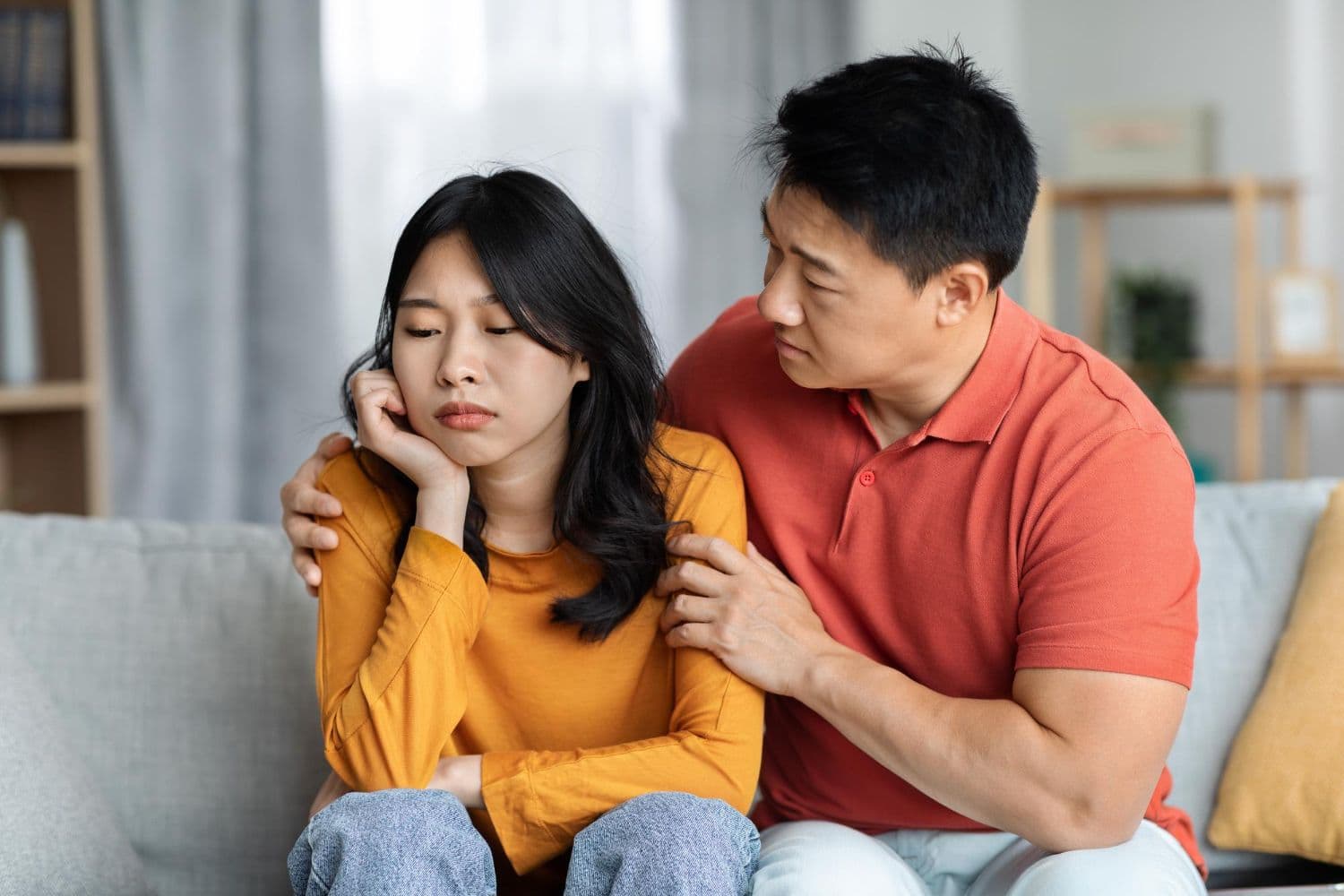
Are you in a relationship? Or, looking to get into one? If yes, what would your first reaction be if we suggested you seek couples therapy?
Some people may feel relieved by the idea. Others may feel uneasy and defensive. Some may even feel open or excited, although that’s less common. All feelings are valid.
After all, talking to a couples therapist can be intimidating. What if it causes a rift? What if we can’t even protect whatever bond we have right now?
Premonitions like this occur because we are wired for human connection – and our innate need to protect that connection makes us vulnerable to analysis paralysis.
A lot of misconceptions can hold couples back from seeking help. That’s why we’re here to bust some myths about couples therapy and hope to make the world of relationship therapy in Singapore a little less scary.
Our platform connects clients to vetted and experienced Therapists in Singapore who are well qualified in providing couples counselling - both in-person as well as online therapy. A majority of our Therapists are members of recognised bodies such as the Singapore Association for Counselling (SAC) and the Singapore Psychological Society (SPS). If you'd like help with selecting someone suitable for relationship counselling or marriage counselling in Singapore, WhatsApp us at +65 9831 0005 or email us at [email protected].

The reality of couples therapy is quite simple: It’s for anyone who’s in a relationship, regardless of how strong or weak the bond may be.
Think of it this way… If a sleeve on your shirt is torn, would you still wear it? You probably wouldn’t. A small tear may get worse over time. So you’d stitch it early.
The same goes for relationships. Why wait until things completely fall apart before you seek couples counselling.
Couples have several reasons for going to therapy. It’s true that sometimes partners may be on the verge of breaking up and may not have thought of professional help until then. However, some couples even meet with a therapist to ensure a respectful and safe breakup.
Couples therapy in Singapore can be beneficial at any stage of any relationship. Everyone has something to improve on, like:
You are a real couple if you need couples therapy. You are also a real couple if you don’t need therapy in Singapore.
The mutual decision to seek help merely shows your desire to keep your bond alive.
Seeking relationship therapy in Singapore means that you are putting in real effort to navigate:
So, not only does it take a village to raise a child, but it also takes a village to raise a relationship. In fact, it’s important that relationships do not exist in isolation.
Couples therapy can work for all types of relationship issues.
You may feel isolated and sceptical now, but seeking professional support can provide clarity and a solid roadmap for fixing your relationship.
That said, even though the benefits of couples therapy are huge, it is not a magic fix.
Have you ever sat for an exam without preparing for it and hoped you’d still score full marks? Many of us have. But it shows us the reality that results are a direct product of effort.
Couples therapy works the same way. You may need to put in the effort for it to work.
Sometimes, it can also be hard to imagine what ‘putting in effort’ even looks like.
Maybe you grew up in a house of slamming doors and shouting voices. Perhaps you’ve never seen people communicate healthily. Talking to a counsellor can help you unpack these family patterns and understand how past experiences may be influencing your current relationship dynamics. With awareness, couples can learn new ways of communicating, setting boundaries, and responding to each other with empathy instead of reacting from old habits.
Your couples therapist can also help you create a clearer picture of healthy bonds. Therapeutic approaches such as Emotion Focused Therapy (EFT) have strong research backing to help people work through relationship trauma or negative childhood experiences.
Let’s look at the trajectory of a happy relationship:
You meet someone -> you spend time with them -> you fall in love. For the first few months of the relationship, it’s just the two of you trying to learn more about each other. Eventually, when you’re sure about everything, you introduce your partner to friends, family, and perhaps even relatives. Now, it has become a ‘serious relationship.’
At this point, if problems arise, you may turn to your loved ones to seek advice. If your friends or family care about your partner as much as they care about you, they may help you make sense of the situation and provide a fresh perspective. You build a support system.
Moreover, your loved ones are usually the first people to protect you if they notice signs of an abusive relationship. Think about how many times you may have helped your friends from narcissistic partners.
This is what it means to raise a relationship – with personal and professional help from the people around you.
Couples counselling dates back to the 1920s and 1930s, so it is not new, nor is it a fad.
The purpose of any type of counselling is ultimately to help individuals create sustainable change.
In fact, research also shows that nearly 70-90% of couples benefit significantly from therapy sessions. During sessions, you and your partner may learn scientific tools to:
The tools you learn during couples counselling are transferred to you via great care and are intended to make you self-reliant and capable of handling any future issues.
Typically, you will need to attend 12-14 weekly sessions to see real and lasting changes in yourself and your relationships. The duration and intensity of couples therapy also make for solid proof that it cannot be a fad.
A single 1-hour session may not change the trajectory of your relationship. Perhaps 20 sessions could. Some may even need 30 weekly sessions.
But a single session can’t fix everything.
The reality is that couples therapy is more of a marathon. Some couples may have to run a 5k, while others could benefit from 10k. Like a marathon, couples therapy cannot be fast. It’s more about endurance and consistent effort from you, your partner, and the psychotherapist.
The timeline for making progress may depend on:
Like how running a marathon takes hard work before (ie preparation) and after (ie recovery) the event, so does your relationship.
Your couples therapist may assign therapy homework, activities, or tasks that you may have to do independently or together with your partner.
No reason is too big or too small. The only prerequisite to seeking help is that you are in a relationship that’s making you unhappy most of the time. Having said that, even if you're in a healthy relationship, you may still choose to engage in couples therapy to improve your relationship and deepen your connection.
Note: For couples therapy to work, you and your partner must be willing to put in the work and energy during and outside of sessions. See the ‘What if My Partner Won’t Go to Couples Therapy?‘ section if you’re specifically looking to encourage your partner to seek help.
Below are some reasons you should talk to a couples counsellor in Singapore.
After so long being together, seeing your partner grow and change is natural. However, as people grow, they unintentionally grow apart from each other.
Distance with a loved one like that can make you feel empty or lonely. Initially, you may focus on other things, like hobbies, friendships, and work.
Over time, as things slow down or as you retire, you may look at each other and wonder where all those years went.
During therapy, you and your partner can:
Every couple argues. Arguing or having conflicts is normal. But how you argue could say a lot about your relationship.
Imagine you’re angry because your partner didn’t spend last weekend with you. When you see them at night, you lash out. Communicating your emotions becomes impossible, and both of you feel hurt and upset before going to sleep.
When you wake up, you carry on like nothing happened. However, deep down, both of you may have suppressed your emotions, and the hurtful arguments play in your head repeatedly, even when things have returned to normal.
Couples counselling in Singapore may teach you:
The ‘Hold Me Tight’ exercise is used by couples counsellors to help you approach arguments from a place of compassion and softness.
Seeking couples therapy in Singapore can make you better skilled in using such approaches.
Post-traumatic stress disorder, or trauma in any form and from any aspect or time in life, does not just ‘go away’.
Your past trauma can seep into your relationship. The negative patterns you engaged in previously can show up as fear, withdrawal, or lack of trust.
Trauma can make you feel powerless and unsafe. It can cause extreme reactions to all sorts of situations.
For example, let’s assume Clay had an abusive relationship with his mother. Due to the trauma, he often feels the need to please others, engages in over-the-top behaviour to satisfy his romantic partner, and hesitates to have constructive conversations to solve conflicts.
The maladaptive behaviours Clay uses can affect his partner’s emotions and make them feel frustrated or angry.
Experiencing trauma can have a significant impact on your personality, habits, lifestyle, and love life. If you notice signs of trauma in yourself or your partner, it’s important to seek couples therapy.
A good counsellor in Singapore can help you:
Are you thinking, ‘I’m willing to try therapy, but what if my partner doesn’t want to?’
You’re not alone in this. It puts you in a vulnerable position to show your partner that you want to work on the relationship. Your desire to fix the problems can make it seem like you care more about them than they do.
However, remind yourself that your partner may hesitate for several other reasons. Perhaps they don’t understand the benefits of couples therapy, or they believe in common couples therapy myths.
Here’s what you can do if your partner is unwilling to try couples therapy:
Consider individual counselling if your partner doesn’t want to try couples therapy. One healthy shift in a relationship can encourage the other person to reflect too.
In conclusion, couples counselling is valuable for every couple at any stage of their relationship.
If you are holding back due to some of the myths around couples therapy that we’ve explored in this article, we hope you’ve now gained confidence and clarity on how couples therapy can help.
At TYHO, we have a diverse pool of Therapists who help with many different issues. You can talk to someone whether you are in a straight, queer, monogamous, or polygamous relationship.
You can start by scheduling an in-person or online couple therapy session. We provide in-person counselling in several locations across Singapore, including City Hall, Tanjong Pagar, and more.
Ursula K. Le Guin said it best: ‘Love doesn’t just sit there, like a stone; it has to be made, like bread; remade all the time, made new.’
If you are in crisis, or another person may be in danger, do not use this site. Please refer to these resources instead.


Mon - Fri (excluding public holidays)
9.30 AM - 6 PM (+08:00 GMT)
OUE Downtown 2, 6 Shenton Way, #12-11B, Singapore 068809
© 2026 Talk Your Heart Out Pte Ltd
Need Help? Chat with us