

Overcoming mental illness without enough social or professional support can be hard. However, mental health counselling in Singapore can make your journey to recovery possible.
On one hand, mental illness counselling can help you handle mental health issues such as clinical depression, obsessive-compulsive disorder, etc.
On the other hand, therapy for mental health recovery can also help you manage daily emotional struggles such as low self-esteem, mood swings, lack of confidence, and so on.
Many people around the world deal with mental health challenges. In fact, in Singapore, 17% of the population has poor mental health.
The good news is that more and more Singaporeans are choosing counselling support for anxiety, depression and other mental health issues.
Seeking therapy for mental health recovery is a brave step, and you're going in the right direction! Mental health counselling can lead to feeling better and making positive changes in your life.
In this article, we explore various types of mental health issues, the benefits of mental health counselling in Singapore, and how to develop mental resilience through counselling. We also answer some of the most asked questions about counselling.
TYHO provides in-person and online therapy in Singapore. Our platform connects clients to vetted and experienced Psychotherapists, Psychologists, and Counsellors in Singapore. We refer to all our mental health professionals collectively as "Therapists", given the overlap in their scopes of practice. A majority of our Therapists are members of recognised bodies such as the Singapore Association for Counselling (SAC) and the Singapore Psychological Society (SPS). If you'd like help with selecting someone suitable, WhatsApp us at +65 9831 0005 or email us at [email protected].

Mental health issues can deeply affect how we think, feel, and function in this world. Emotional distress can occur from worries.
At Talk Your Heart Out (TYHO), we offer professional and confidential mental health counselling in Singapore. Our counsellors can help you with personal issues such as mood swings, uncontrollable anger, feeling sad for no reason, feeling emotional all the time, etc.
You can also receive mental illness counselling for issues like bipolar disorder, post-traumatic stress disorder, and borderline personality disorder.
The Mental Health Foundation (MHF) notes that there are two main types of mental health issues – those with:
We may all experience stress, sadness, or anxiety at some point in our lives. However, when these emotions become intense and start to interfere with daily functioning, they may indicate neurotic symptoms.
During mental health counselling in Singapore, your counsellor may analyse and understand your symptoms through the first few sessions.
Neurotic symptoms of mental health issues involve experiencing emotions much more deeply than usual.
For example, a person might feel anxious about a job interview, which is normal. However, if this anxiety becomes overwhelming to the point where it affects the person’s performance, they may suffer from an anxiety disorder.
Some mental illnesses with neurotic symptoms that you can seek mental health counselling in Singapore for include:
Psychotic symptoms may affect the way we interact with reality.
For example, psychosis could include hearing or seeing things that are not there or feeling utterly convinced of ideas that don’t match up with the facts (eg thinking that your mother hates you when she doesn’t).
Mental illnesses associated with psychotic symptoms include:
In the following section, we take a look at the process of mental health counselling in Singapore and how it helps with recovery.

Mental health counselling in Singapore offers a safe environment to manage your emotions and develop skills to navigate your mental health issues more effectively. You can also develop mental resilience through counselling.
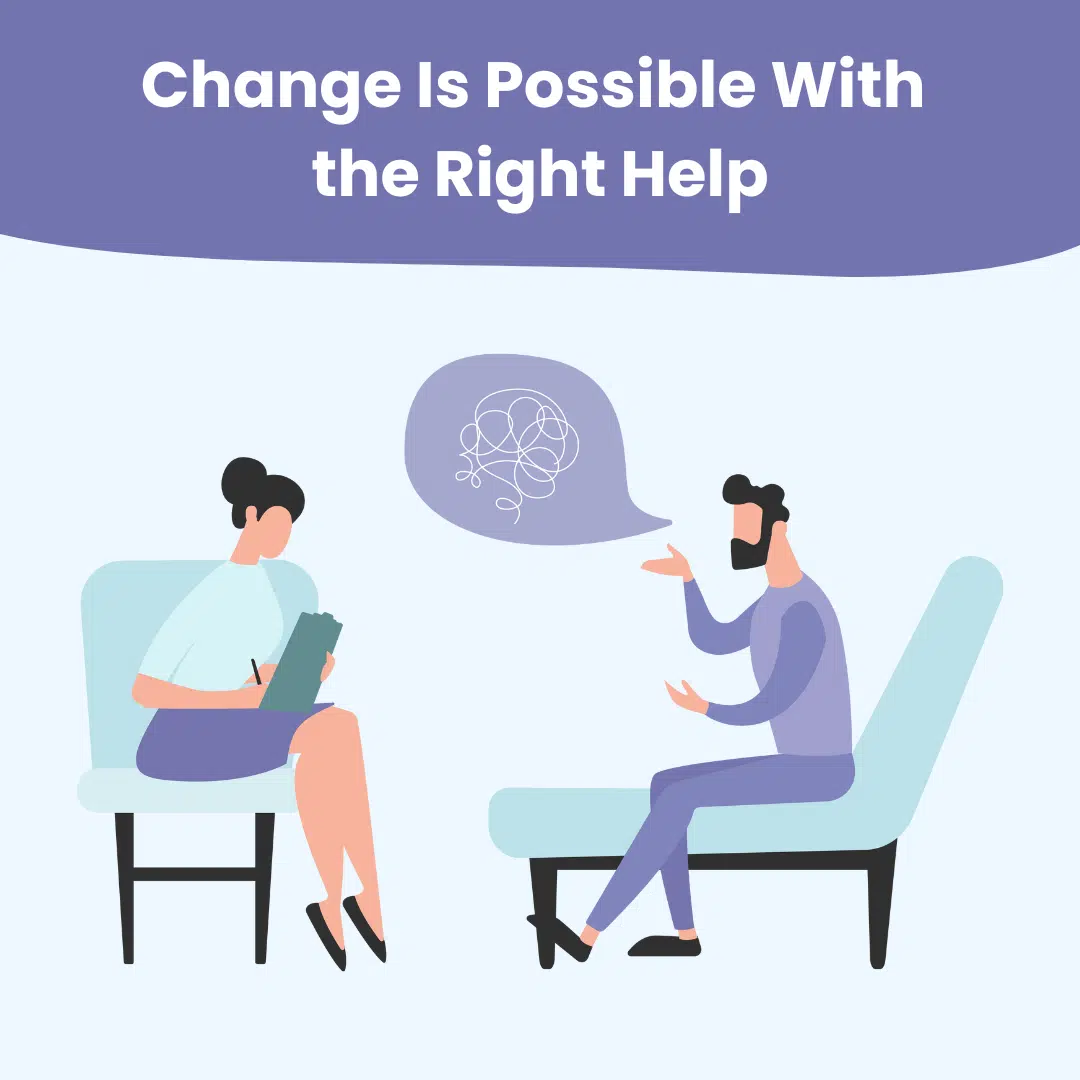
During counselling for mental health recovery, you will engage in structured conversations with an expert counsellor.
Based on your shared information, experiences and concerns, your counsellor will help you observe and recognise patterns that may trigger emotional distress.
The key aspect that can help you get the most out of counselling is building a healthy relationship with your counsellor. The therapeutic alliance you create will significantly influence the speed and quality of your progress during and outside therapy sessions.
Through mental health counselling in Singapore, you may learn essential skills to handle your problems. Your counsellor will choose a therapeutic approach based on their expertise, your preference, and what works best for your mental health issues.
Some of the common therapeutic approaches used for mental health recovery in Singapore are:
The upcoming section explores some of the common benefits of mental health counselling in Singapore.
Are you wondering how counselling helps mental health? Below are some of the benefits of mental health counselling in Singapore:
In the forthcoming section, we discuss how mental health counselling in Singapore helps build mental resilience.
Mental resilience is like a muscle in your brain that helps you get through difficult situations. And just like a muscle, the more you work on it, the stronger it gets.
Resilience is a skill that includes several aspects, such as:
At TYHO, our Therapists can help you develop mental resilience through mental health counselling in Singapore.
Below are some tools you can expect to encounter during counselling sessions:
Through mental health counselling in Singapore, you can deal with root issues such as:

Life’s challenges can be overwhelming, but mental health counselling in Singapore can help you build resilience. Resilience isn’t about never feeling upset; it’s about how you react, respond, and recover from difficult situations.
Mental health counselling in Singapore provides a supportive space to build resilience. With the help of a counsellor, you can learn coping skills through various therapeutic approaches, such as CBT and mindfulness.
Remember, it’s not just okay, it’s brave to seek help. Talking to a professional can provide clarity, boost self-confidence, and offer new strategies to manage stress and emotions.
If you’re ready to take the next step towards personal growth and mental resilience, explore our mental health services in Singapore 💜
Mental health counselling in Singapore helps with several mental health issues.
At TYHO, we offer confidential and professional mental health services in Singapore. Our counsellors provide counselling support for anxiety, depression and other issues like:
Before your first session, you may complete an intake form at TYHO.
You may be asked to provide basic details, such as your name, contact information, and age, in the form. You may also have to share emergency contact information (of someone close to you) and write a brief outline of your expectations of counselling.
As your session begins, your counsellor will take you through the process of mental health counselling in Singapore.
Each counselling session is unique. Hence, you can share your mental health issues either in the first session or whenever you feel comfortable.
To understand your needs and issues better, your counsellor may ask you several questions regarding your:
At any point during mental health counselling in Singapore, you can ask questions. Feel free to talk about the therapy approach, style, how soon you can expect to progress, and what you need to do outside of sessions.
Counsellors at TYHO are non-judgmental and empathetic and will happily answer any questions you may have!
If you're wondering how to find the right counsellor, read our blog on "5 Tips to Choose the Right Counsellor in Singapore".
If you are in crisis, or another person may be in danger, do not use this site. Please refer to these resources instead.


Mon - Fri (excluding public holidays)
9.30 AM - 6 PM (+08:00 GMT)
OUE Downtown 2, 6 Shenton Way, #12-11B, Singapore 068809
© 2026 Talk Your Heart Out Pte Ltd
Need Help? Chat with us