

When two people start therapy for social anxiety, you might expect their journeys to look similar. The diagnosis is the same, and the symptoms and goals could be similar.
However, that is rarely how the process unfolds. On the one hand, one person may spend weeks learning structured coping strategies to address an immediate crisis. On the other hand, the second person may begin their journey by exploring their childhood experiences.
Both people are in therapy and are making progress. Yet their paths look completely different.
That difference occurs because the process involves a personalised therapy approach.
Therapy is built layer by layer around you, your experiences, thoughts, ideals, relationships, and history.
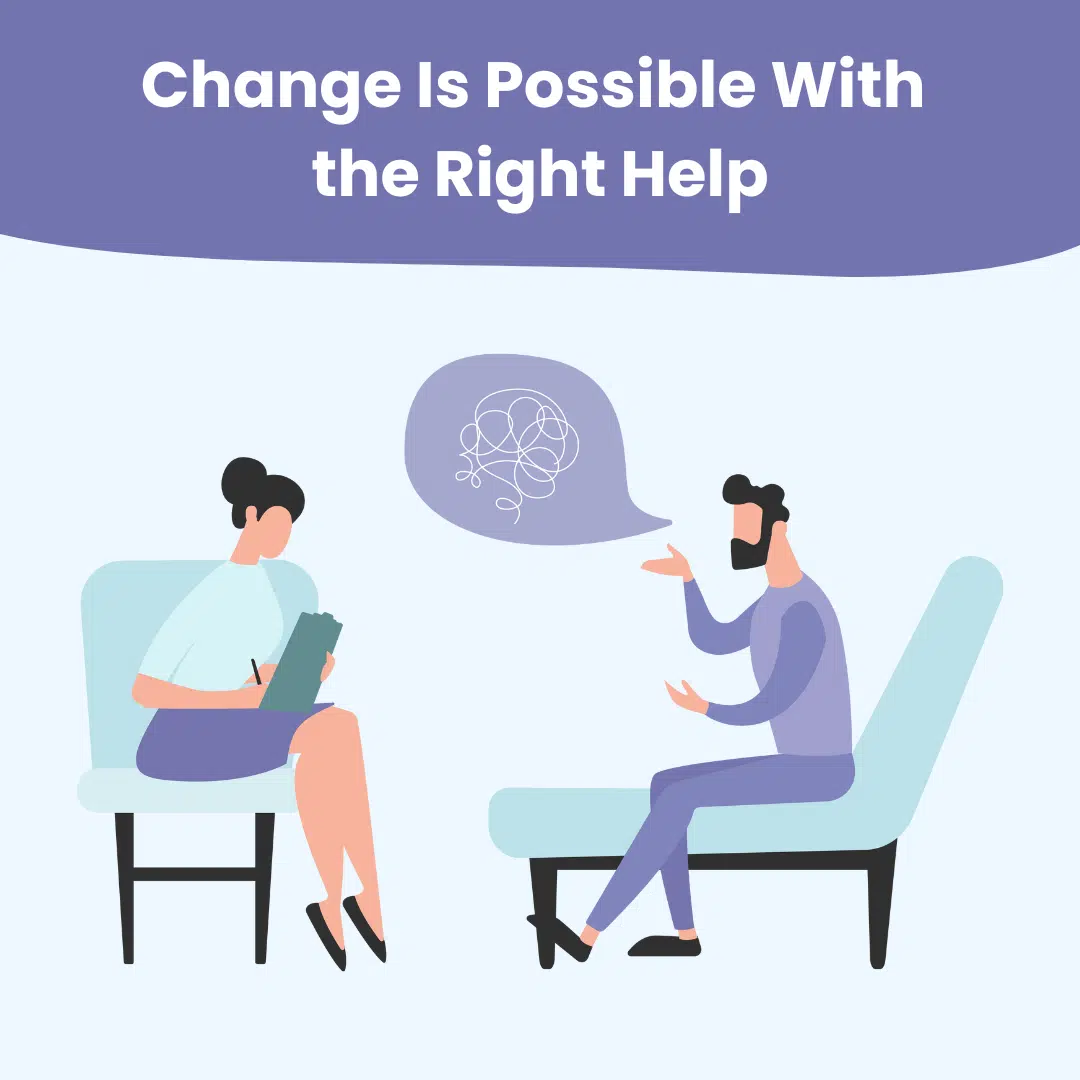
That is why therapy works differently for everyone. Understanding the different types of therapy styles and what may work for you can help you start the process with clear expectations. Let’s dive in!
TYHO provides in-person and online therapy in Singapore. Our platform connects clients to vetted and experienced Psychotherapists, Psychologists, and Counsellors in Singapore. We refer to all our mental health professionals collectively as "Therapists", given the overlap in their scopes of practice. A majority of our Therapists are members of recognised bodies such as the Singapore Association for Counselling (SAC) and the Singapore Psychological Society (SPS). If you'd like help with selecting someone suitable, WhatsApp us at +65 9831 0005 or email us at [email protected].

A personalised therapy approach means that the scientific tools and styles are tailored to the individual rather than applied as a fixed template.
Personalising could mean that the therapist in Singapore may recommend working with one method or combining multiple methods to best suit your needs. The latter, a combination of multiple methods, is known as an eclectic approach.
In practice, personalisation in psychotherapy begins with listening. A therapist explores and tries to understand you in as much detail as possible.
For example, if you prefer structure and are detail-oriented, sessions may involve setting clear therapy goals and planning practical exercises.
On the flip side, if you process things emotionally and prefer to reflect on your feelings, your sessions may feel slower and involve several mindfulness and grounding techniques.
A personalised therapy approach also depends on your personal context, which may include your:
Therapy that integrates these contexts by default feels relevant and personalised.
There are many types of psychotherapy, and each may include different tools.
In a personalised therapy approach, a therapist may use a single method or combine multiple methods. Many other scenarios could also exist, such as:
In this section, we’ll look into the three most common types of therapy methods:
CBT focuses on the connection between thoughts, emotions, and behaviours. The approach is practical and structured.
For example, if you struggle with catastrophic thinking (ie assuming the worst-case scenario, even if unlikely to occur), CBT can help you identify the patterns that may be contributing to the cognitive distortions.
Let’s assume you’re thinking that you will ‘definitely fail a presentation’. In CBT, your Singaporean counsellor may encourage you to examine the evidence for and against that thought.
Do you have evidence that your thought is true? Have you ever failed a presentation? What facts can tell you that you will truly fail the presentation? Questions such as these can help you develop a counterargument to your negative thought patterns and compare them with positive outcomes.
CBT often includes homework exercises, thought records and behavioural experiments.

Cognitive restructuring can help you navigate and cope with overthinking, catastrophising, or mind-reading (ie assuming that other people are constantly thinking poorly of you).
Here’s a quick activity for you:
Identify a distressing situation. Example: ‘My manager emailed asking to talk.’
Write down your automatic thought: ‘I must have done something wrong.’
Rate your emotion (0 to 100): Anxiety 80%
List evidence that supports the thought: ‘She rarely calls meetings.’
List evidence against the thought: ‘She also schedules check-ins regularly,’ and ‘I met my deadlines.’
Think of a neutral thought: ‘There are many possible reasons for this meeting. I do not have proof that I did something wrong.’
Re-rate your emotion: Anxiety 45%
Research consistently shows that cognitive restructuring reduces generalised anxiety and depressive symptoms by challenging distorted thinking patterns rather than accepting them as facts.
Humanistic therapy focuses on an individual's emotional exploration and self-understanding. The idea is to first understand your inner world. Why do you think the way you do? What triggered your emotions, and so on.
For example, if you often feel misunderstood or disconnected from your emotions, you may find this approach helpful. Your therapist may offer empathy and reflective questions rather than focusing on immediate solutions.
Through this counselling approach, you may develop deeper self-awareness and self-acceptance.
The empty chair technique may help you navigate unresolved emotions, internal conflict, or difficult conversations.
Here’s how it works:
For example, a client who struggles with anger towards a parent may express anger in one chair and then respond from the imagined parent’s perspective in the other.
This method may help you externalise your emotions and create distance, so you’re able to approach situations in a calm and collected manner.
Solution-focused therapy is future-oriented and focuses on the strengths of an individual. For example, instead of over-analysing problems, you may learn to challenge yourself with questions like, “What would tomorrow look like if this issue were slightly better?”
In a therapy setting, a therapist might ask you to identify exceptions. When has the problem felt less intense? What was different? These insights can also help build momentum, and the professional can create a roadmap for your therapy goals.
In a personalised therapy approach, your therapist may combine several methods. You might begin with structured CBT tools to focus on reducing anxiety, then shift into deeper emotional work once you feel safer.
The miracle questions helps with hopelessness and feeling stuck.
Here’s how it works:
The therapist asks: ‘Suppose tonight, while you are asleep, a miracle happens and the problem that brought you here is solved. Because you were asleep, you do not know it happened. When you wake up tomorrow, what would be the first small sign that things are better?’
You then describe specific thoughts you have. For example, ‘I would get out of bed without snoozing,’ or ‘I would reply to emails calmly.’
The method helps you shift your focus from analysing the problem to identifying the observable changes. Once those small changes are defined, psychotherapy works backwards to build them gradually.
Psychotherapy is the broader process of talking therapy aimed at improving mental health and emotional well-being. Within that process, therapists adapt the pace, method, and sometimes the style of therapy.
Let’s consider the pace of sessions. Some people are ready to explore painful memories early on. Others may need more time to feel safe and better articulate their emotions.
Now, let’s look into the depth of the exploration. While one client may want to understand childhood attachment patterns, another may prefer to focus on practical tools they can learn to address problems in their current life, like anxiety or stress.
All and any therapy pace and depth are valid.
Below is a simple exercise often used in sessions to assess clients’ emotional regulation (ie how well an individual is able to enhance or reduce the intensity of their emotions):
Draw a rectangle. Inside it, write ‘Calm and Grounded.’ Above the rectangle, write ‘Overwhelmed.’ Below it, write ‘Numb or Shut Down.’
Over a week, notice where you spend most of your time emotionally. You may wish to mark your observations with a dot or a symbol of your choice. This helps identify whether the counselling approach should first focus on regulation skills or deeper processing.
Several factors may influence how psychotherapy is structured and how effective it is. Let’s look into some of the most common factors in this section.
Choosing the right counselling approach depends on understanding your needs and having an open conversation with your counsellor in Singapore.
To understand your needs, try asking yourself the following:
Often, you may not need (or know) all the answers right away. What’s more important is to reflect on your thoughts and share them with the professional as honestly as possible.
To determine whether the counselling approach is right for you, it may also be helpful to reflect after each therapy session.
Some prompts are:
Remember that you can always talk to your therapist about what’s working and what’s not working during sessions.
If, after all the conversations, you observe that the session doesn’t feel personalised or right for you, you can always look for a different therapist in Singapore.
Therapy works differently for everyone because we are all different. A personalised therapy approach recognises that difference and builds on your therapy experiences.
If you’re ready to get started on your journey, find a TYHO Therapist in Singapore. We’re here at [email protected] if you need help in choosing a professional. Talk your heart out, we’re here for you.
If you are in crisis, or another person may be in danger, do not use this site. Please refer to these resources instead.


Mon - Fri (excluding public holidays)
9.30 AM - 6 PM (+08:00 GMT)
OUE Downtown 2, 6 Shenton Way, #12-11B, Singapore 068809
© 2026 Talk Your Heart Out Pte Ltd
Need Help? Chat with us