

Are you looking to focus on your personal development?
Therapy for personal development improves several areas of your life, such as self-awareness, growth mindset, and confidence.
At Talk Your Heart Out (TYHO), we believe that therapy for personal development is for everyone.
After all, as Socrates said – “The unexamined life is not worth living.”
In the sections below, let us explore what personal development is, the various benefits of therapy for personal growth and some exercises for habit-building.
TYHO provides in-person and online therapy in Singapore. Our platform connects clients to vetted and experienced Psychotherapists, Psychologists, and Counsellors in Singapore. We refer to all our mental health professionals collectively as "Therapists", given the overlap in their scopes of practice. A majority of our Therapists are members of recognised bodies such as the Singapore Association for Counselling (SAC) and the Singapore Psychological Society (SPS). If you'd like help with selecting someone suitable, WhatsApp us at +65 9831 0005 or email us at [email protected].

At its core, personal development can help improve your capabilities, life skills, and overall quality of life.
When you start to focus more on personal development, you may acquire the skills to handle the above situations.
Improving oneself is a long and ongoing process that involves setting and achieving specific and measurable goals. Therapy for personal development is a structured approach that helps with self-growth and creating a positive change.
Moreover, therapy in Singapore can also clarify what you want, help you gain motivation to move outside your comfort zone and learn about your strengths and weaknesses.
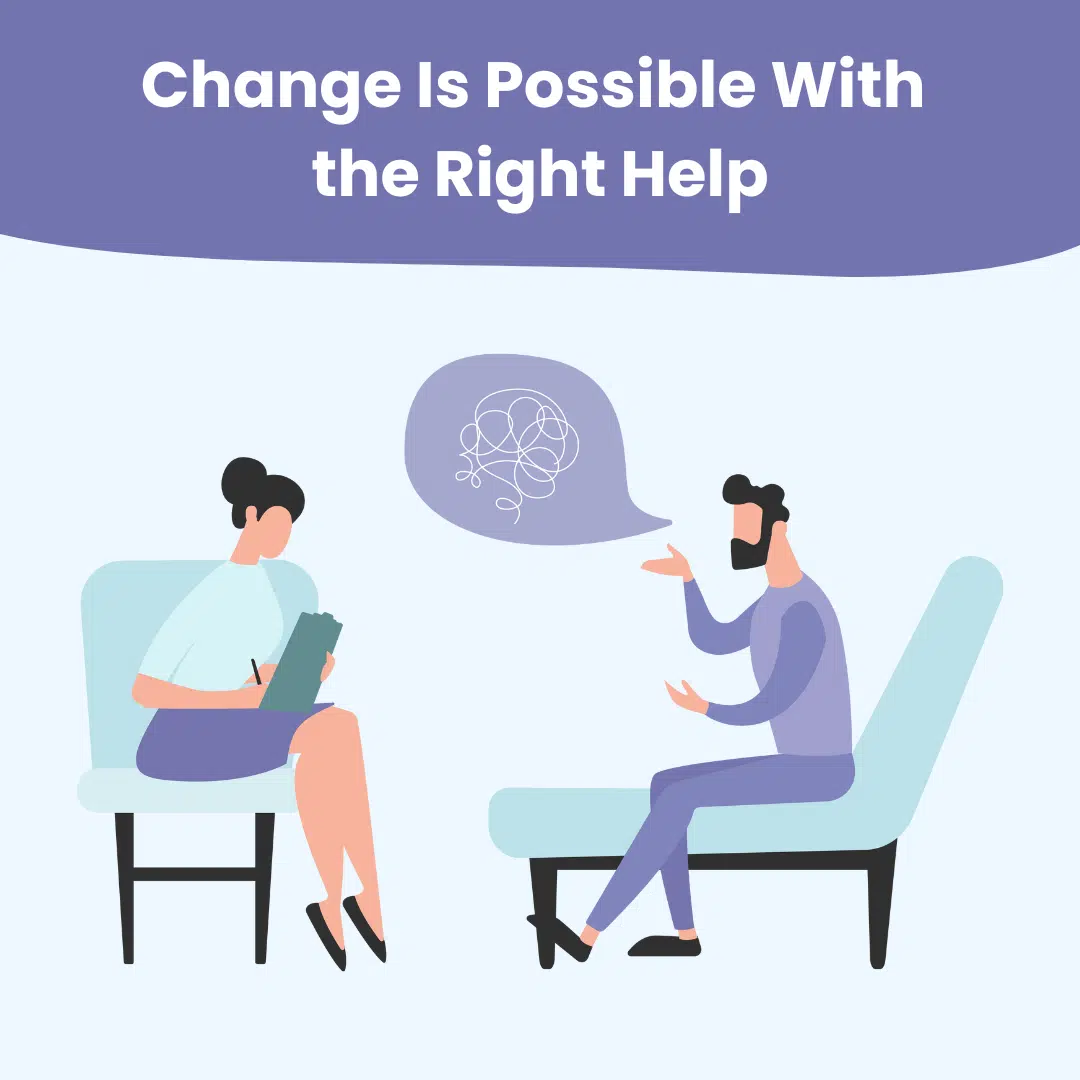
Therapy for personal development may provide you with a safe environment to talk about your thoughts and feelings.
During sessions, you may discuss why you face an issue, what you want to achieve after therapy sessions, and how you want to improve your life. Your Therapist will help you identify and acknowledge the negative thought patterns that may prevent you from living a quality life.
A key benefit of therapy is managing emotions. Once you learn how to control and manage your fear, anger, and frustration, you will handle difficult situations more effectively.
Through scientific skills like cognitive reframing (ie changing negative thoughts to practical ones), a common technique used in Cognitive Behavioural Therapy (CBT), you will make better decisions, gain clarity on your values, and improve your communication skills.
Your Therapist may use tools like narrative therapy to teach you how to:
Lastly, therapy can also help in improving your self-esteem and confidence.

In a book called Atomic Habits, James Clear explains that all habits follow this order: cue, craving, response, and reward.
Think of it this way: The cue is looking at a fit body (ie reward), the craving is desiring the fit body for ourselves, and the response is our attempt to obtain the reward.
Now that we know the science of habits, how do we change them?
A change in behaviour implies a change in identity. We start a habit because of the need to find joy, but as a regular practice, the habit becomes a trait of our personality.
For example:
Learning these habits means that they become a reliable solution to:
In fact, conditions like social anxiety are made up of worries. From a mechanistic perspective, these thought patterns are learned and reinforced throughout life.
Therefore, to counteract these habits, Therapists may use an alternative ‘habit-building’ tool like mindfulness to bring awareness to your cognitions and actively change them.
Below are three self-reflection exercises that can help improve your self-awareness.
Each skill offers a unique perspective on personal development.
The 3 skills are: Journalling, SWOT Analysis, and Core Values Exercise.
We may all have journaled at some point in our lives. Maybe you’ve written down your thoughts before or have used bullet journal spread to identify your goals.
However, we hope to share a structured plan for journalling that can be more intentional and help you with personal development.
Journalling specifically for personal development is about exploring your emotions, identifying your daily triggers, and creating an achievable plan.
To develop the habit of journalling, set aside some time every day. It could be just 1 minute or as long as you’d like.
Use the time you allocate to reflect on your day, feelings, and reactions to various situations.
Ask yourself questions that help you reflect on various aspects of your personality. For example, think about what makes you happy, what makes you feel stressed, and how you usually overcome your issues.
Your journal is your ‘second brain’, and similar to how nobody else has access to your brain, your journal would also be private. Hence, try to be as honest as possible.
Some question prompts to begin journalling are as follows:
SWOT = Strengths, Weaknesses, Opportunities, and Threats.
An analysis is how we identify, analyse, and use the above four elements to improve ourselves.
Your strengths are your personal assets – all the things and skills you are good at. Identifying your skills can help you use them more effectively.
Ask yourself:
Your weaknesses are areas where you can improve. Try to identify them and acknowledge that working on your weaknesses is essential for growth.
Ask yourself:
Opportunities are external factors that you can use for your benefit.
Lastly, threats are external or internal challenges that you might face. Your challenges are outside your control, but you can learn how to manage them.
Ask yourself:
You may gain a deeper self-awareness by conducting a SWOT analysis. You can do this exercise as often as you want or stick to it once per month.
The more you reflect on these four ideas, the better you can understand yourself.

Therapy for personal development can help you identify your core values and align your life with them.
In this section, you will learn an easy way to perform this exercise.
These are the values that you may want to implement in your life.
As you grow and evolve, so might your values. Revisiting and reassessing your core values ensures they align with who you are and aspire to be.
Visit our Singapore Therapist page to read about how our therapy for personal development can help you and the different kinds of services we offer.
Miracle questions have the power for the Therapist to explore your inner world and find solutions to your problems.
Therapists may ask you to imagine what an alternative reality could look like.
For example, what does your ideal relationship look like? Which place of residence would keep you happy and safe for a long time?
Your alternate reality is imagined to be better, ideal, and with minimal or no problems.
During therapy sessions, your Therapist may:
As the Therapist challenges you to broaden your perspective, you may become more engaged in the therapy process. Your proactive involvement will result in valuable insights into building an ideal lifestyle.
Miracle questions are used for individual, family, or couples therapy. The questions are also modified based on the type of approach used and the problems presented.
Below is an example of the beginning stages of miracle questioning:
‘This may sound strange to you, but imagine going to bed and sleeping at your usual time. When you wake up, suddenly, miraculously, your life has completely changed. Something exciting has happened. The problem you visited me with today does not exist anymore. You are happy, confident, healthy, and doing well in life. With this picture in mind, tell me, what difference would you first notice about yourself in this new life?’
In talk therapy, if-then planning can help you identify problematic situations and learn new behaviours to overcome them.
If-then plans are helpful to build positive habits that you’ve already learnt in therapy. The technique can also be used for any other habits you want to form, like journaling, learning music, or painting.
For example, in the context of learning therapeutic skills, imagine your Therapist in Singapore taught you a new tool to improve your sleeping habits.
The professional has also assigned this technique as therapy homework that you may need to do between sessions. In this case, a relevant if-then plan might be, ‘If it’s after 5 pm, then I will only have water instead of coffee.’
The implementation of if-then plans specifies what habit to stick to during a particular situation.
You may work with your Therapist to:
Below are some examples of if-then plans:

Many TYHO Therapists in Singapore are trained in motivational interviewing. This is used during therapy for personal development.
During sessions, Therapists may ask constructive and motivational questions to elicit your desire for change.
The key qualities of MI include the following:
Questions focused on a client’s desire to change may include words like want, wish, or hope. For example:
Therapists may ask questions focused on ability as well. These questions may include elements like what the client can do or assess their capabilities for change. For example:
MI questions may also involve prompts. Therapists may focus on exploring the reasons that a client wants to change, even if they feel unprepared for it. For example:
To wrap up, therapy can help you achieve personal development in various areas of your life. This can include managing a busy professional life, balancing academics and personal life for students, or handling parents who frequently guilt-trip you.
Personal development is all about helping you improve your skills, abilities, and overall quality of life.
Therapy for personal development improves several areas of your life, such as self-awareness, growth mindset, and confidence.
Journalling, SWOT analysis, and core values exercise are three proven skills for personal development.
Professional Therapists can help you recognise and accept harmful thought patterns that may stop you from living a good life. Moreover, you can also learn how to control your fear, anger, frustration, and other unhelpful emotions to handle difficult situations effectively.
If you are in crisis, or another person may be in danger, do not use this site. Please refer to these resources instead.




Mon - Fri (excluding public holidays)
9.30 AM - 6 PM (+08:00 GMT)
OUE Downtown 2, 6 Shenton Way, #12-11B, Singapore 068809
© 2026 Talk Your Heart Out Pte Ltd
Need Help? Chat with us